Series ARC 2: The Growth Years
ARC 2: GROWTH YEARS
Books 7 - 12 | Ages 9 - 10
Harold expands his world through friendship, empathy, resilience, and courage. He discovers what true connection looks like.
BOOK 7: Harold's Grandparents' Day Gaffe
Theme: Empathy and Understanding
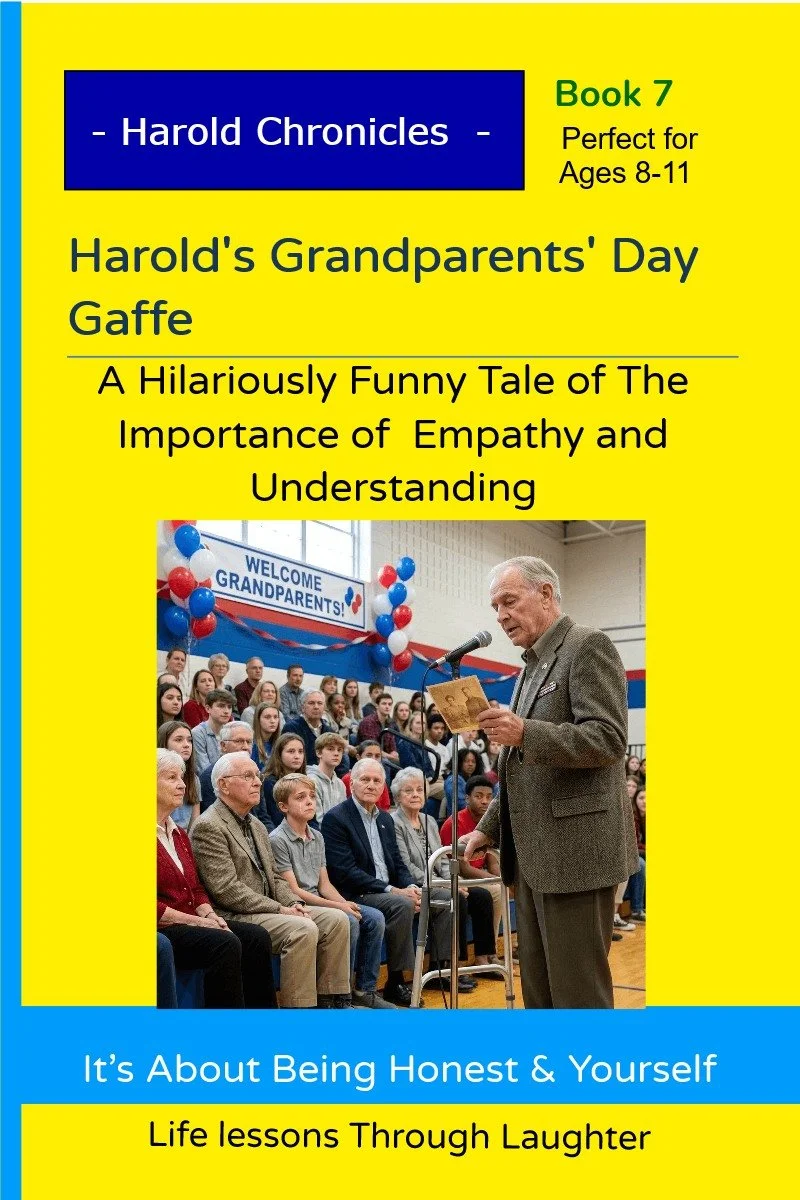
BOOK 7: HAROLD’S GRANDPARENTS’ DAY GAFFE
Theme:Empathy & Respect for Elders
The Hook: Harold is dreading Grandparents' Day. While his friends have grandmas who do yoga and grandpas who drive Ferrari’s, Harold has Pop—who uses a walking frame and tells "boring" stories about the olden days. Harold tries to hide, but when Pop reveals a secret connection to Harold’s own life, Harold learns that being "cool" has nothing to do with how fast you can move.
The Lesson:Perspective-Taking. Everyone has a story worth listening to, and physical limitations don't define a person's worth.
Why kids love it: The cringey relatability of being embarrassed by family, followed by the heartwarming reveal of Pop’s "superhero" past.
The Educator’s Edge: Aligned to ACARA (Empathy: AC9HP4P04) and CCSS (Character Perspective: RL.4.6).
BOOK 8: Harold's Neighbourhood Watch Nightmare
Theme: Thinking Before You Accuse
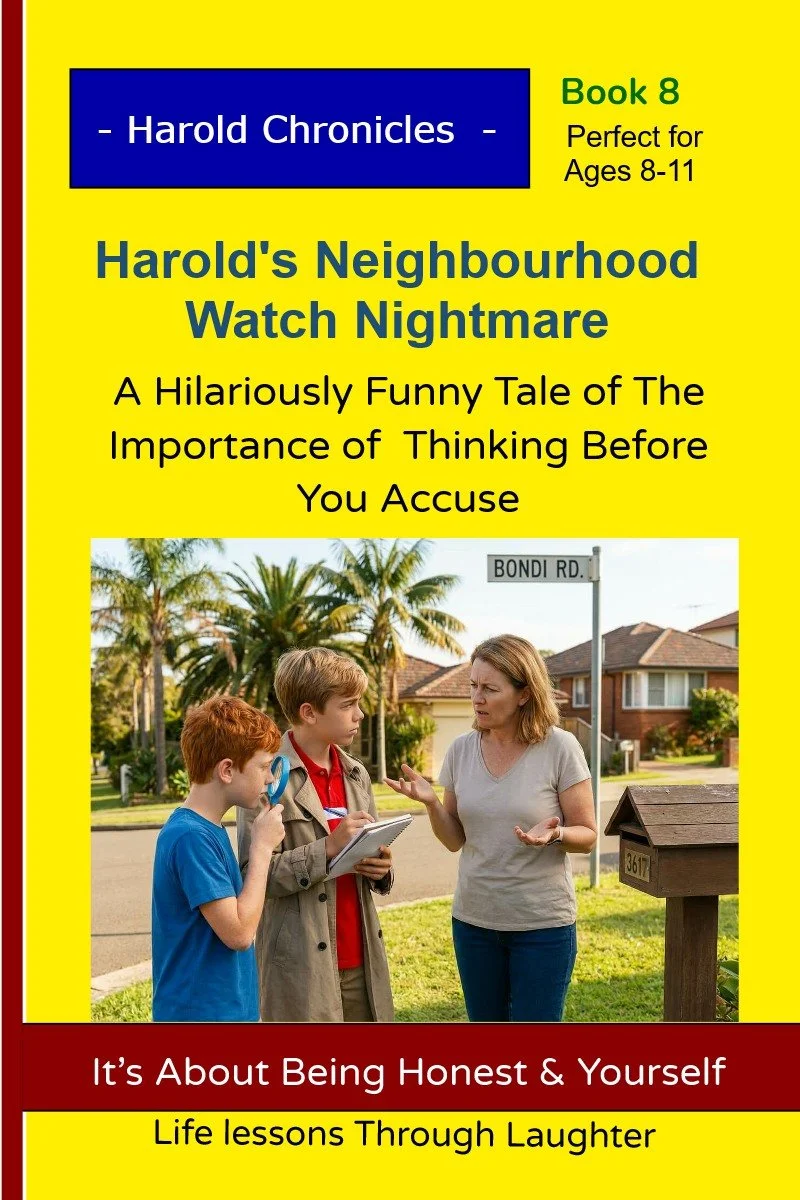
BOOK 8: HAROLD’S NEIGHBOURHOOD WATCH NIGHTMARE
Theme:Critical Thinking & Avoiding Assumptions
The Hook: When a football and a garden gnome go missing, "Detective Harold" is on the case. He builds an elaborate "Investigation Wall" and pins the crimes on the quiet new neighbour, Mr. Kowalski. Harold is 100% sure he’s cracked the case... until he publicly accuses an innocent man and realises his "clues" were just his own biases in disguise.
The Lesson:Social Awareness. Assumptions can hurt real people; true critical thinking means gathering facts, not just confirming what you want to believe.
Why kids love it: The fun of the "stakeout" and the detective tropes, balanced by the serious, real-world lesson about how we treat strangers.
The Educator’s Edge: Aligned to ACARA (Critical & Creative Thinking) and CCSS (Drawing Inferences: RL.4.1).
BOOK 9: Harold's Emotion Explosion
Theme: Feelings and Self-Control
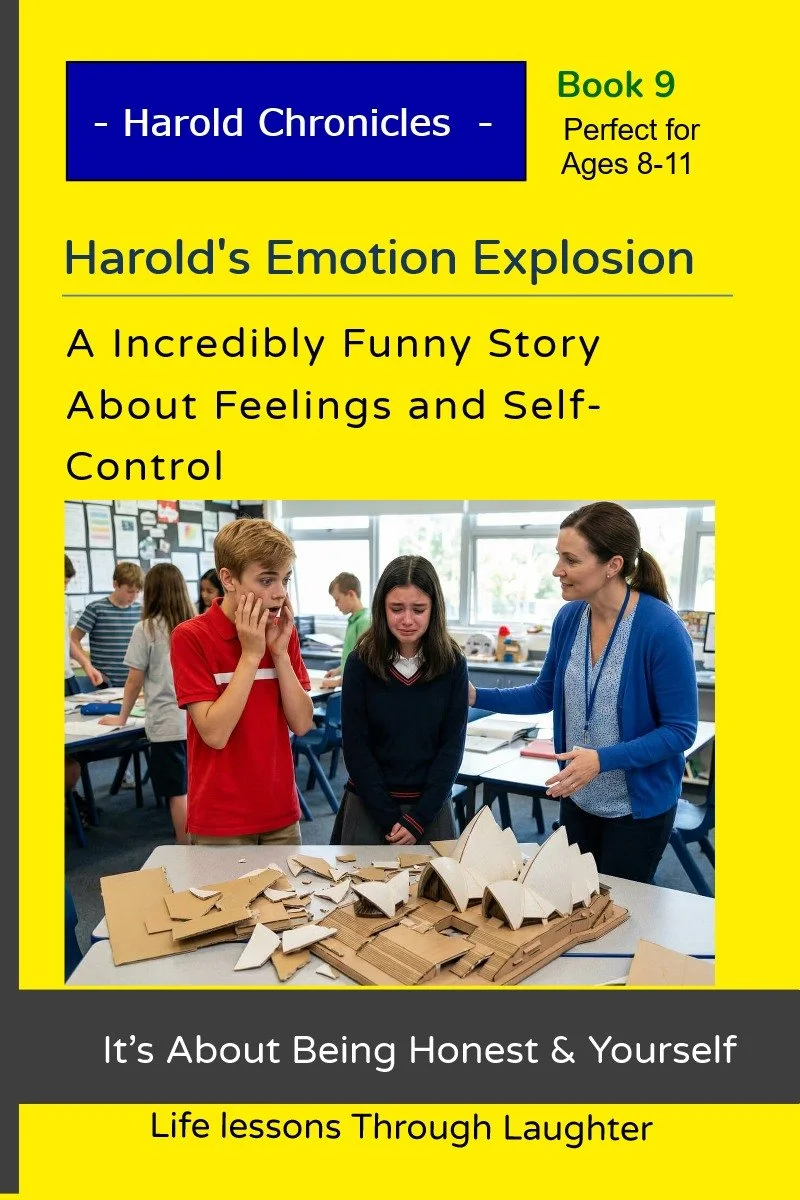
BOOK 9: HAROLD’S EMOTION EXPLOSION
Theme:Emotional Regulation & Self-Control
The Hook: Harold is having the worst week ever. He fails a maths quiz, burns his toast, and feels like a shaken soda bottle ready to burst. Instead of talking about it, he bottles it up until—BOOM—he explodes during a group project, destroying a scale model of the Sydney Opera House and nearly ruining his friendship with Mia.
The Lesson:Self-Management. Feelings are information, not faults. Bottling them up leads to explosions; expressing them with "I statements" leads to solutions.
Why kids love it: The tension of the "ticking time bomb" and the dramatic destruction of the craft project.
The Educator’s Edge: Aligned to ACARA (Self-Management: AC9HP4P03) and CASEL (Self-Awareness: Identifying Emotions).
BOOK 10: Harold's Gratitude Gaffe
Theme: Appreciation and Gratitude
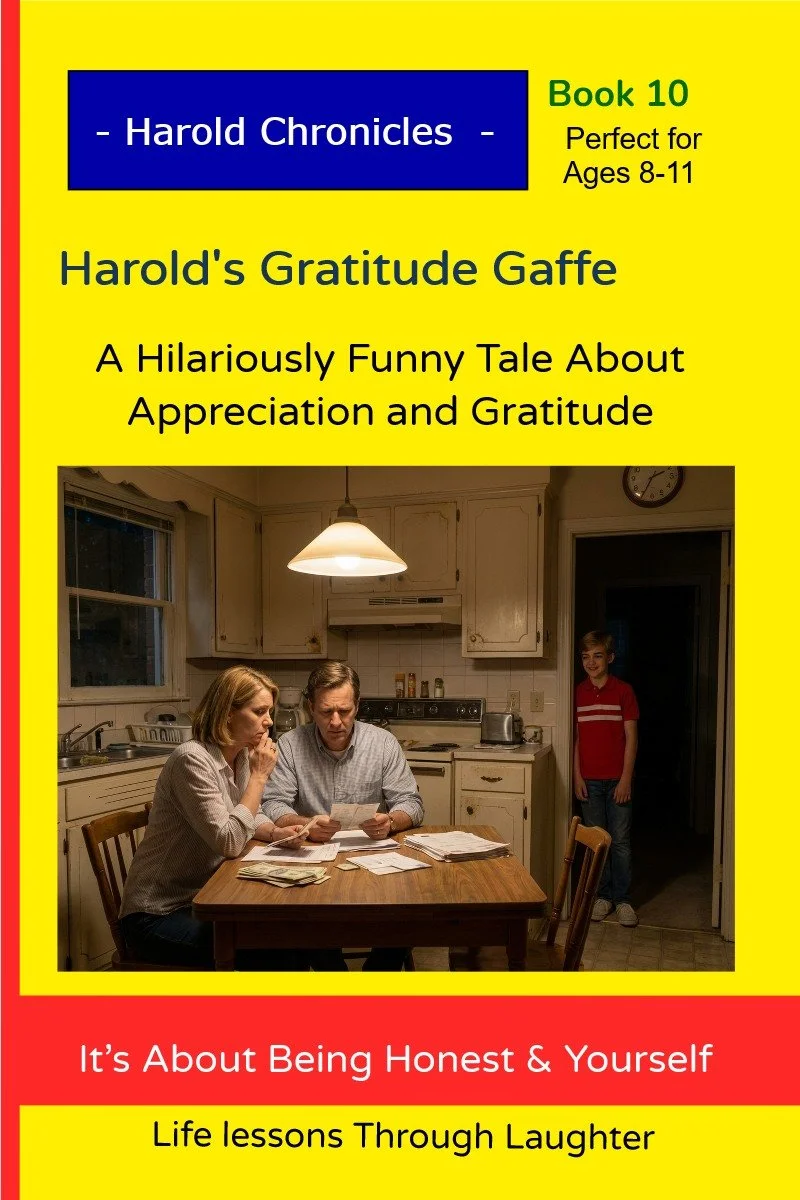
BOOK 10: HAROLD’S GRATITUDE GAFFE
Theme:Gratitude vs. Entitlement
The Hook: Harold is convinced he needs the legendary "HyperSpeed 3000" scooter to be cool. When his parents gift him a sturdy (but decidedly un-cool) regular scooter, he can't hide his disappointment. It takes a sudden family crisis involving Spike’s emergency vet bills for Harold to realize that while he was looking at what he didn't have, he was missing the abundance of love he did have.
The Lesson:Perspective. Comparison steals joy. True gratitude isn't just saying "thank you"—it's recognizing the value of what is right in front of you.
Why kids love it: The relatability of wanting the "cool toy" and the heartwarming shift when Harold realizes Spike matters more than wheels.
The Educator’s Edge: Aligned to ACARA (Social Awareness) and CCSS (Theme & Perspective: RL.4.2).
BOOK 11: Harold’S RESPONSIBILITY RECKONING
Theme: Personal Accountability
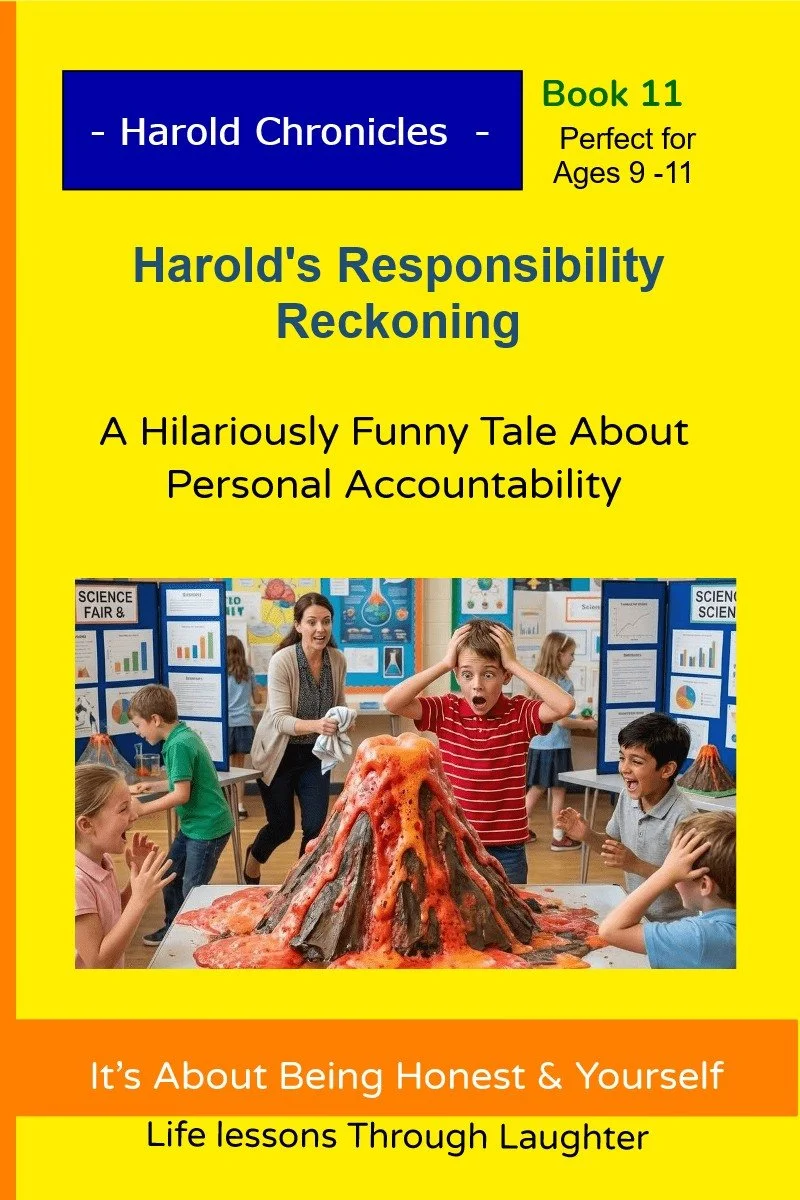
BOOK 11: HAROLD’S RESPONSIBILITY RECKONING
Theme:Accountability & Time Management
The Hook: Harold has three weeks to do his science project. He spends two weeks and six days playing video games and assuming "future Harold" will handle it. When he wakes up on the due date with nothing but a cardboard box and panic, he tries to blame Murphy, his parents, and even the dog. But this time, the excuses don't work.
The Lesson:Ownership. Blame is a trap. Real freedom comes when you stop making excuses and start making a plan.
Why kids love it: The frantic "night before" panic that every student recognizes, and the relief of finally owning the mess.
The Educator’s Edge: Aligned to ACARA (Personal Responsibility) and CCSS (Character Traits: RL.4.3).
BOOK 12: Harold's PERSISTENCY PROBLEM .
Theme: Persistency and Trying Again
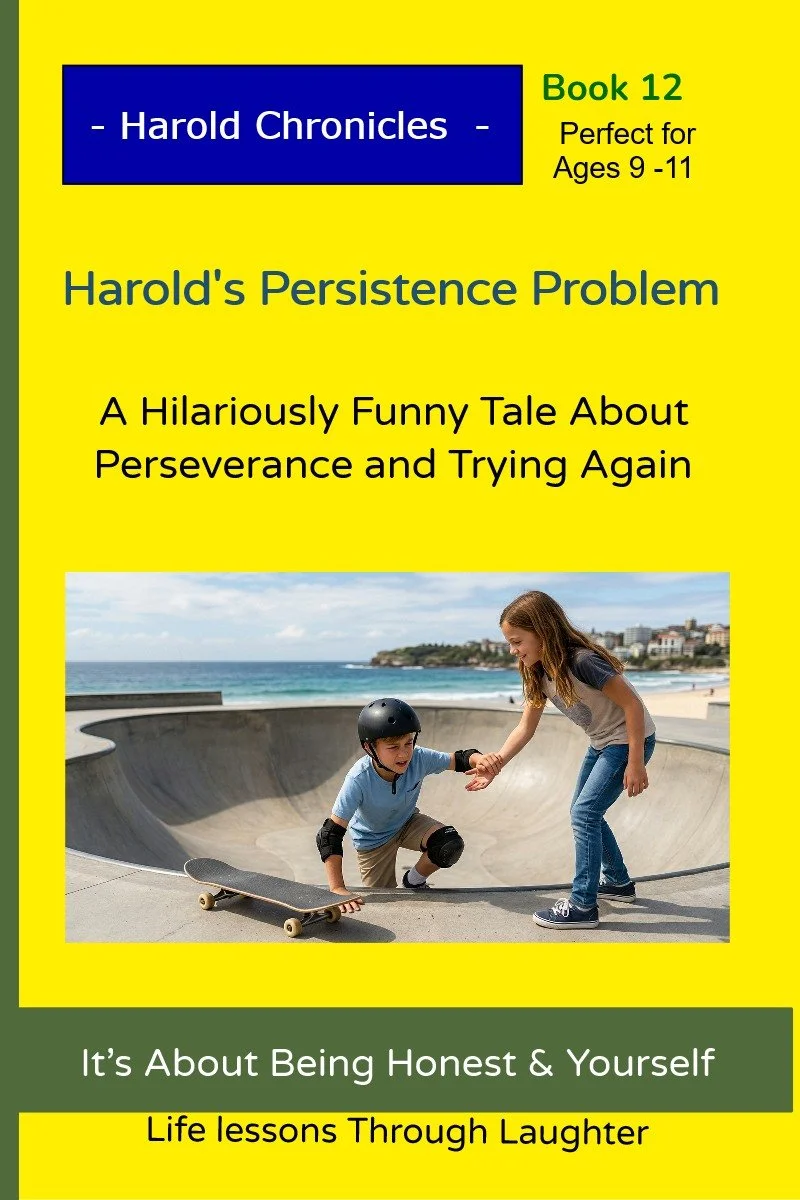
BOOK 12: HAROLD’S PERSISTENCE PROBLEM (Arc 2 Finale)
Theme:Resilience & Learning from Failure
The Hook: Harold decides he is going to be a skateboard pro. He borrows a board, stands on it, and immediately falls. Hard. After hours of scraped knees and a bruised ego (and eventually a wrist injury), Harold wants to quit forever. He learns that the difference between a "failure" and a "skater" isn't talent—it's the willingness to get back on the board one more time.
The Lesson:Grit. Failure is just feedback. A setback isn't the end of the road; it's often the setup for a comeback.
Why kids love it: The physical comedy of the falls and the inspiring "training montage" vibe of Harold trying again.
The Educator’s Edge: Aligned to ACARA (Personal Strengths: Resilience) and CCSS (Growth Mindset).