Table B Parent Resources

Table A Educator Resources

Why This Works: The Harold HUB

A simple, structured system that connects the three most important influences in a child’s life — and keeps them working together.

At the heart of the Harold Ecosystem is The Harold HUB a central connection point that brings together:

  • Educators (Table A)

  • Families (Table B)

  • Healthcare & Wellbeing Professionals (Table D)

Instead of working in isolation, each group is supported by structured guides, shared language, and aligned learning pathways.

The result?
Children experience consistent support, stronger understanding, and real behavioural change — across school, home, and life.

🔗 THE THREE PILLARS

🎓 Educators (Table A)

Structured classroom tools that align literacy, wellbeing, and real-world thinking.

🏡 Families (Table B)

Simple, practical ways to reinforce learning, build resilience, and stay connected at home.

❤️ Wellbeing & Healthcare (Table D)

Support frameworks that link emotional wellbeing, communication, and developmental growth.

When these three environments connect, learning stops being fragmented — and starts becoming transformational.

How a Harold Experience Works

💡 A simple, repeatable learning journey that connects story, conversation, and real-world application.

🔁 THE 4-STEP FLOW

📖 1. Read the Story

Children engage with a humorous, relatable Harold story designed to capture attention and introduce real-life challenges.

💬 2. Start the Conversation

Guided prompts help educators and parents explore:

  • emotions

  • decisions

  • consequences

  • perspectives

🧠 3. Apply the Learning

Children connect the story to their own lives through:

  • classroom discussion

  • home conversations

  • simple activities

🔗 4. Reinforce Across Environments

Through the Harold HUB:

  • Educators teach it

  • Families reinforce it

  • Wellbeing professionals support it

👉 The learning sticks.

🌐 One Story. Three Perspectives.

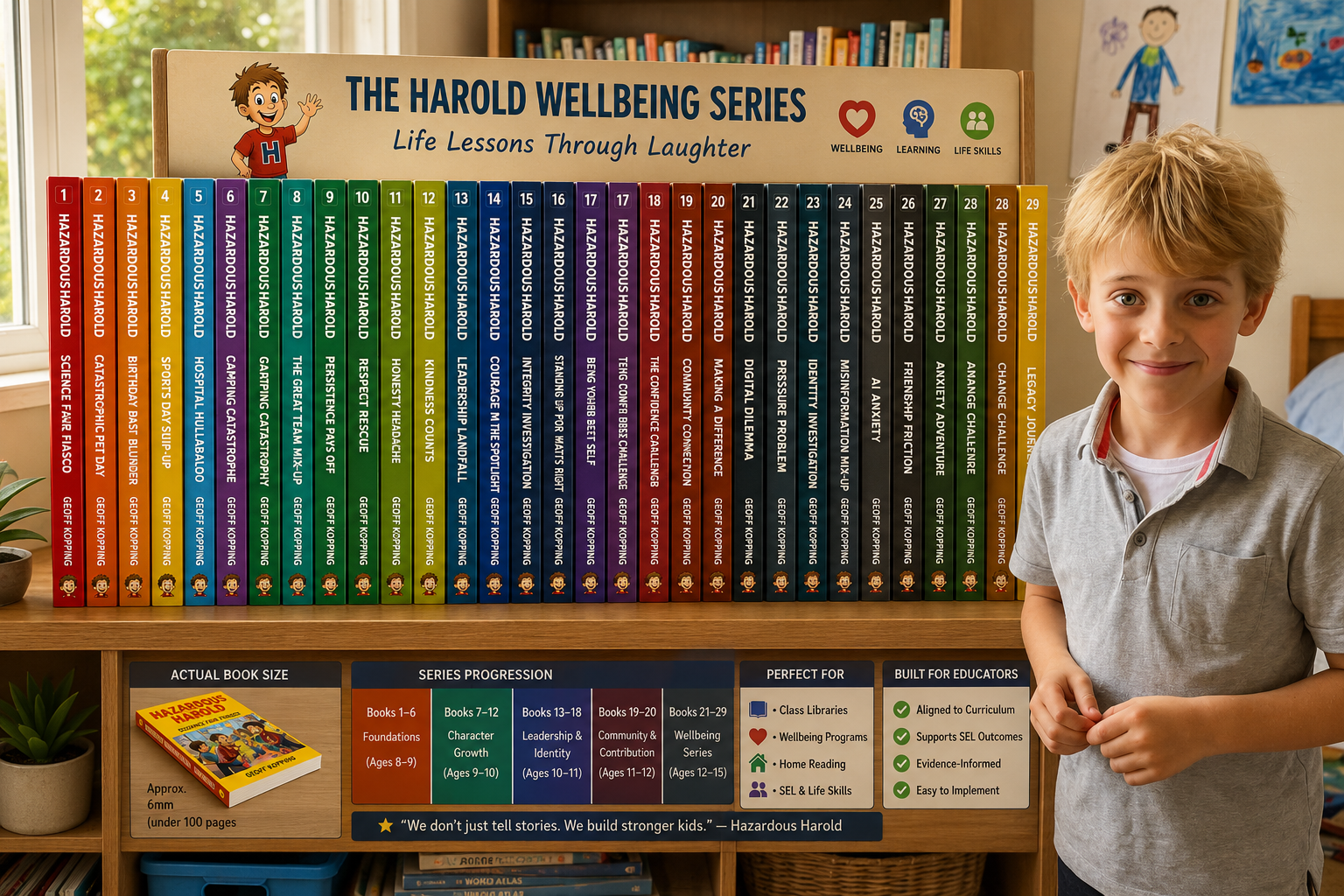
Each Harold book is supported by three aligned guides:

  • Educator Guide→ structured classroom delivery

  • Parent Guide→ practical home support

  • Reader Guide → child reflection and engagement

All three work together — not separately.

💥 This is where most learning systems fail — and where Harold succeeds.

Instead of fragmented support, children experience one consistent message across every part of their world.

Story → Discussion → Application → Reinforcement

‍ ‍Why the Harold Ecosystem Works

Built on how children actually learn — through story, connection, and consistent reinforcement.

🧩 CORE CONTENT

The Harold Wellness & Learning Ecosystem is designed around three evidence-based principles:

🧠 Learning Through Story

Children engage more deeply when learning is delivered through narrative, humour, and relatable experiences.

Harold stories capture attention first — then deliver meaning.

🔁 Reinforcement Across Environments

Most learning is lost because it happens in isolation.

Harold connects:

  • School

  • Home

  • Wellbeing support

So children receive the same message in multiple contexts.

💬 Guided Conversation Builds Understanding

It’s not just what children read — it’s what they discuss.

Structured prompts help children:

  • reflect

  • question

  • understand

  • apply

📊 What This Means for Children

  • Stronger comprehension and engagement

  • Improved emotional awareness

  • Better decision-making skills

  • Increased confidence and resilience

  • A deeper connection between school and home

This isn’t just reading. It’s a connected learning system designed for real-world impact.

Start Your Journey with Harold

💡 Join a growing community of educators, families, and professionals using the Harold Ecosystem to support children’s learning and wellbeing.

🎯 CORE MESSAGE

Whether you're in the classroom, at home, or supporting a child’s wellbeing — Harold gives you the tools, structure, and confidence to make a real difference.

Because every child deserves to be understood, supported, and inspired to grow.

Trusted by educators, families, and growing communities worldwide”