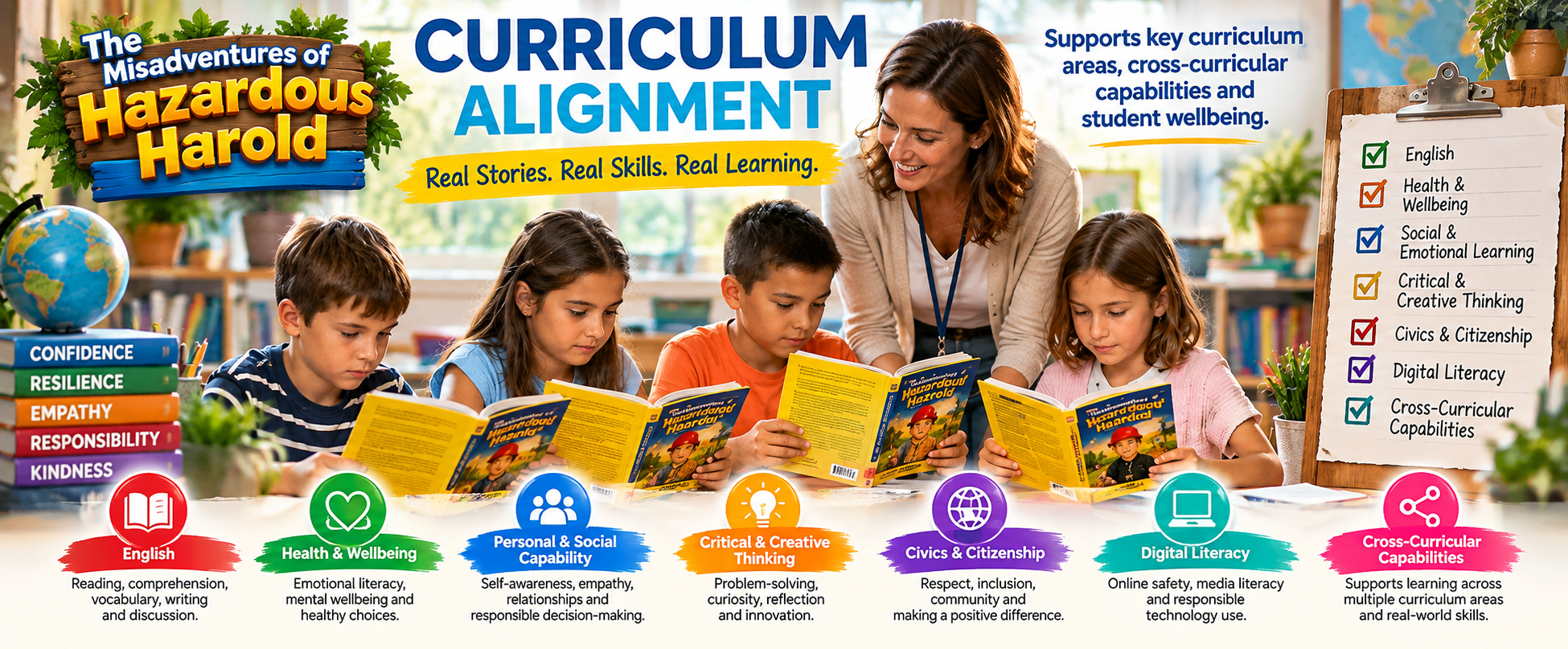
CURRICULUM ALIGNMENT
Life Lessons, Built for the Classroom
One System. Five ARCs. Real Life Skills.
The Hazardous Harold series is a 29-book collection designed to support the
social and emotional growth of children aged 7–15 through humour, story and
reflection — not lectures.
Core Alignment: The CASEL 5
At the heart of our approach is the CASEL 5 Framework for Social and
Emotional Learning. Across the 29-book journey, the series is sequenced to
build:
1. Self-Awareness (ARC 1)
2. Self-Management (ARC 1 & 2)
3. Social Awareness (ARC 2 & 3)
4. Relationship Skills (ARC 3 & 4)
5. Responsible Decision-Making (ARC 4 & 5)
Hazardous Harold is self-aligned with the CASEL 5 Core Competencies and the
Australian Student Wellbeing Framework.
What the Series Actually Teaches
Through Harold's misadventures, each ARC builds real-world life skills,
including:
- honesty
- responsibility
- resilience
- empathy
- friendship and teamwork
- self-control and patience
- courage and moral decision-making
These themes deepen as children move from ARC 1 (ages 7–9) through to ARC 5 (ages 14–15), growing in complexity alongside the reader.
Classroom Discussion Opportunities
Each story provides opportunities for discussion such as:
- Why did Harold make that decision?
- What might Harold do differently next time?
- How did Harold's actions affect others?
- What would you have done in the same situation?
These conversations support both literacy development and emotional growth.
Flexible Classroom Use
Teachers can integrate Hazardous Harold stories in several ways:
- shared classroom reading
- independent reading
- discussion activities
- writing prompts
- social-emotional learning lessons
The humorous nature of the stories helps create an engaging classroom
environment where students feel comfortable exploring ideas.
Supporting Reluctant Readers
One of the primary goals of the Hazardous Harold series is to support
students who may feel disengaged from traditional reading materials.
Humour, relatable characters, and meaningful life lessons help reluctant
readers reconnect with books and build confidence.
Educator Resources
Additional classroom resources are available in the Educator Resource
Library, including discussion prompts and activity ideas.
Core Alignment: The CASEL 5 (Global Standard)
At the heart of our system is the CASEL 5 Framework for Social and Emotional Learning. Whether your school is in New York or New Zealand, our 29-book journey is sequenced to master:
Self-Awareness (ARC 1)
Self-Management (ARC 1 & 2)
Social Awareness (ARC 2 & 3)
Relationship Skills (ARC 3 & 4)
Responsible Decision-Making (ARC 4 & 5)

-
Supplemental Literacy & SEL Resource, Grades 2–9
-
Responsible Decision-Making and Social Awareness
-
Honesty, Responsibility, Resilience, Empathy
-
Ages 7–15
-
Supplemental ELA and Advisory/SEL Curriculum

-
Supplemental Literacy & PSHE-Adjacent Resource, Key Stage 2 & 3
-
Social Awareness and Relationship Skills
-
Friendship, Self-Control, Responsibility, Courage
-
Ages 7–15
-
Guided & Independent Reading, PSHE-Adjacent Discussion

-
Supplemental Literacy & Social-Emotional Learning Resource
-
Self-Awareness and Literacy Skills
-
Empathy, Perseverance, Friendship, Accountability
-
Ages 7–15 (Grades 2–9)
-
Literacy Blocks and Social Studies Enrichment

-
Supplemental Literacy & Wellbeing Resource
-
Relationship Skills and Resilience
-
Teamwork, Problem-Solving, Honesty, Growth Mindset
-
Years 4–10 (Ages 8–15)
-
Literacy Programmes and Wellbeing/Citizenship Education

-
Supplemental Literacy & Wellbeing Resource
-
Responsible Decision-Making and Self-Management
-
Responsibility, Resilience, Leadership, Integrity
-
Years 4–9 (Ages 9–15)
-
Literacy Programmes and Personal & Social Capability
Classroom Discussion Opportunities
Each story provides opportunities for discussion such as:
• Why did Harold make that decision?
• What might Harold do differently next time?
• How did Harold's actions affect others?
• What would you have done in the same situation?
These conversations support both literacy development and emotional growth.
Flexible Classroom Use
Teachers can integrate Hazardous Harold stories in several ways:
• shared classroom reading
• independent reading
• discussion activities
• writing prompts
• social-emotional learning lessons
The humorous nature of the stories helps create an engaging classroom environment where students feel comfortable exploring ideas.
Supporting Reluctant Readers
One of the primary goals of the Hazardous Harold series is to support students who may feel disengaged from traditional reading materials.
Humour, relatable characters, and meaningful life lessons help reluctant readers reconnect with books and build confidence.
Educator Resources
Additional classroom resources are available in the Educator Resource Library, including discussion prompts and activity ideas.