
Teach With Hazardous Harold
A classroom-ready literacy and life-skills program for ages 7–15.
Designed to support reluctant readers ages 7–15
Bring Reluctant Readers Back to Reading
Help students reconnect with reading through humour, story, and meaningful classroom discussion.
Each story is supported by classroom guides, discussion prompts, and reflection activities designed to spark conversation and critical thinking.

Why Teachers Use Hazardous Harold
Harold is not a perfect hero.
He is curious, enthusiastic, and often a little overconfident. His attempts to solve problems frequently lead to spectacular mishaps. — but he learns valuable lessons about responsibility, empathy, friendship, and decision making.
Students quickly recognise something of themselves in Harold. His mistakes feel real, his intentions are good, and the consequences of his actions create meaningful moments for reflection and discussion.
Teachers use Hazardous Harold stories to help students:
• reconnect with reading through humour and storytelling
• improve reading comprehension and vocabulary
• explore cause and effect through character actions
• build confidence discussing ideas and emotions
• develop empathy and understanding of others
Simple 3-Step Classroom Flow
Read the Story
Students read the story independently, in groups, or together as a class.
Explore the Chaos
Students analyse what went wrong in Harold’s adventure and discuss decisions and consequences.
Reflect and Apply
Students connect the story to their own experiences and discuss alternative outcomes.
⭐ Who Harold Helps Most
Designed for real classrooms, not ideal ones.
Hazardous Harold stories are particularly effective with students who:
Are Reluctant Readers
Students who struggle to stay engaged with traditional texts.
Are Emerging Readers
Students building confidence with longer stories and discussion-based learning.
Are Highly Active Learners
Students who respond better to humour, storytelling, and real-world situations.
What’s Included in Your Starter Kit
Educator Guide
Lesson plans, discussion prompts, and classroom extension activities.
Student Reader Guide
Comprehension questions, reflections, and character exploration.
Parent Guide
Ideas for reinforcing learning at home and encouraging reluctant readers.
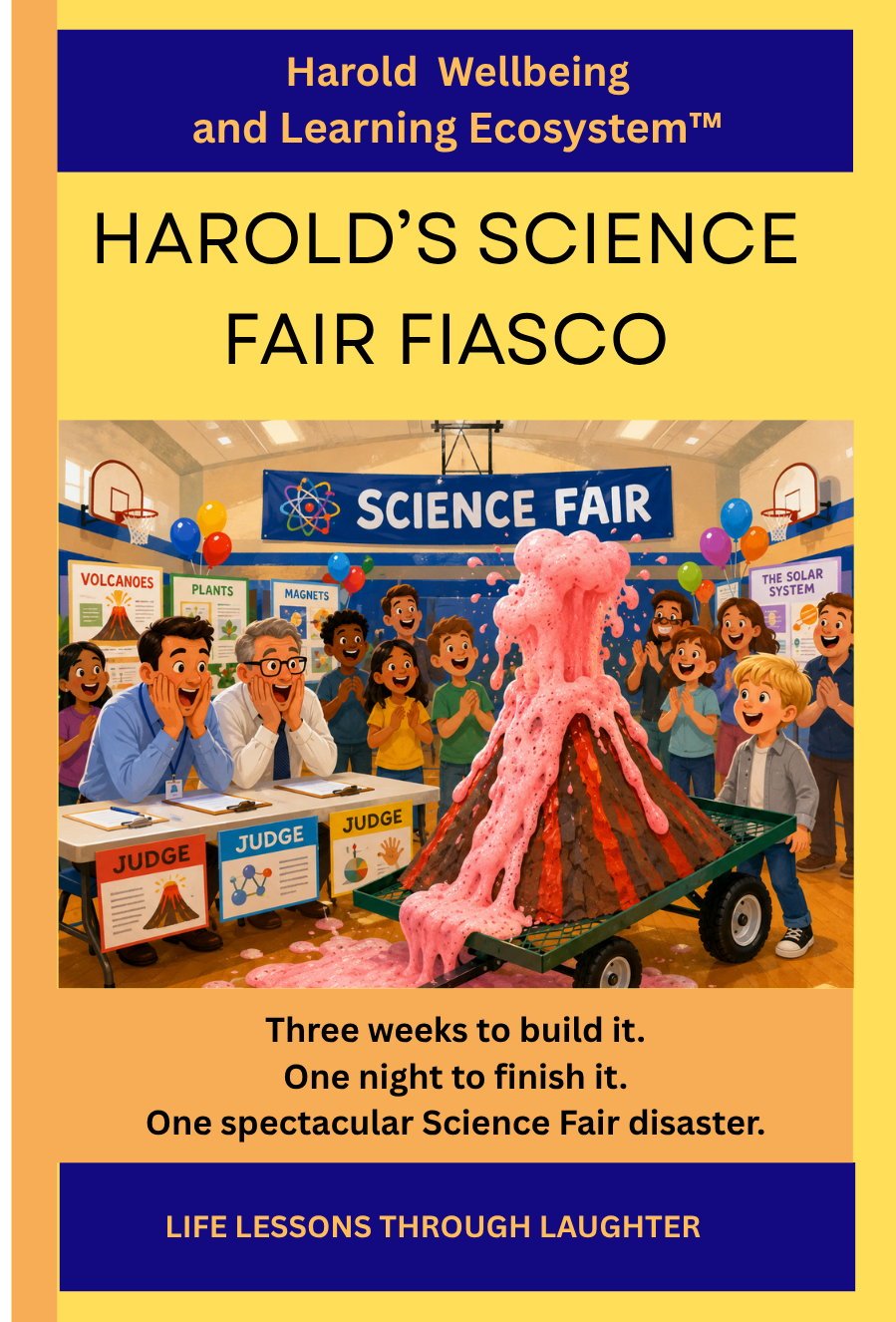
Example Classroom Lesson
Story Example
Harold’s Science Fair Fiasco
Harold decides that this year he is going to create the most spectacular science fair project his school has ever seen. Unfortunately, Harold’s enthusiasm is much greater than his planning skills.
What begins as an ambitious experiment quickly spirals into a chaotic chain of unexpected events.
Through the chaos, Harold learns that careful planning, patience, and asking for help can be just as important as having big ideas.
Classroom Discussion Prompts
Teachers can guide students through a short discussion after reading the story.
Understanding the Story
• What was Harold trying to achieve with his science project?
• What mistakes did Harold make along the way?
• When did things start to go wrong?
Exploring Cause and Effect
• Which of Harold’s decisions caused the biggest problems?
• Could the situation have been avoided? How?
Reflection
• If you were Harold, what would you have done differently?
• What lesson do you think Harold learned from this experience?
“Every Hazardous Harold story includes discussion prompts and classroom resources designed to support meaningful learning.”
Start With Harold
Download your ready-to-use classroom lesson and start engaging your students immediately.
Teachers report that Harold stories quickly capture the attention of students who normally struggle to stay engaged with reading.