Series ARC 3: The Challenge Years
ARC 3: CHALLENGE YEARS
Harold faces more complex situations with digital citizenship, environmental responsibility, social dynamics, and building confidence.
BOOK 13: Harold's LEADERSHIP LESSON
Theme: AUTHENTIC LEADERSHIP
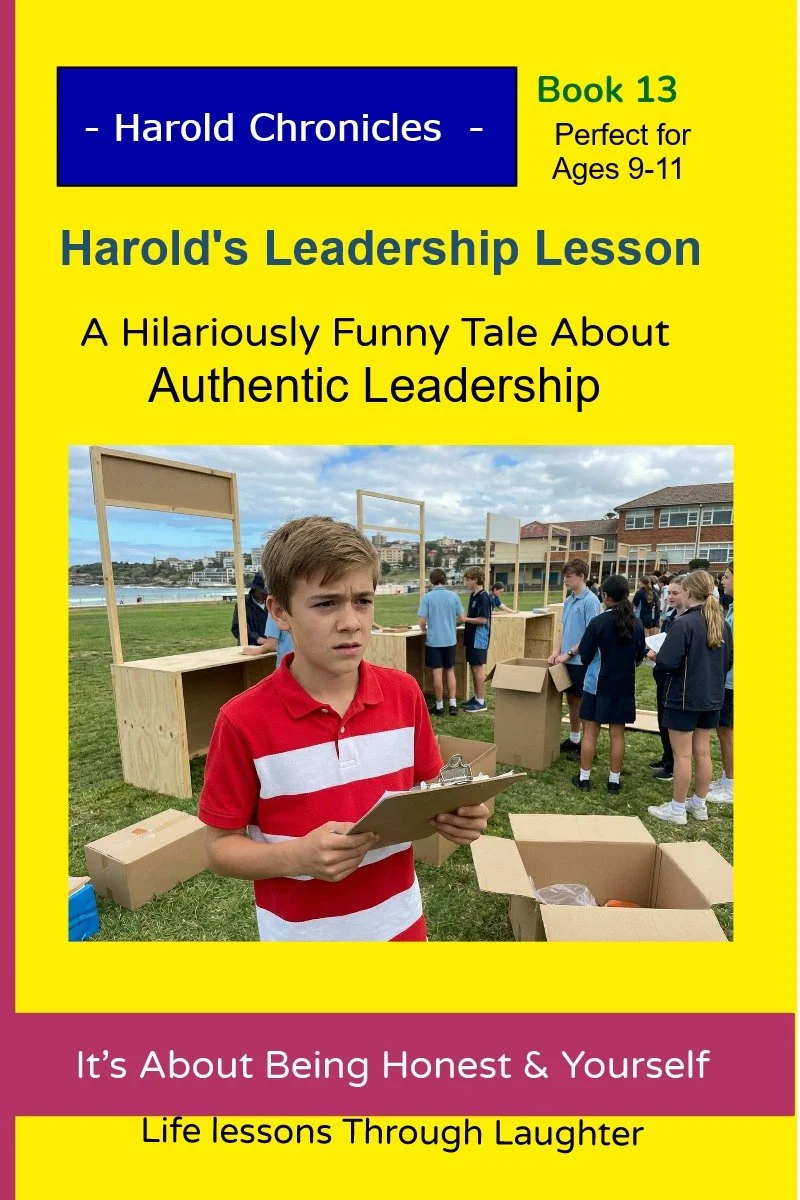
BOOK 13: HAROLD’S LEADERSHIP LESSON
Theme:Authentic Leadership vs. Control
The Hook: Harold volunteers to coordinate the School Fair, convinced that "leadership" means telling everyone what to do. He creates a strict schedule, ignores his team’s ideas, and assigns tasks nobody wants. When the team mutinies and the fair is on the brink of disaster, Harold realizes that a real leader doesn't create followers—he creates other leaders.
The Lesson:Collaboration. Leadership isn't about control; it's about empowering others to shine.
Why kids love it: The chaos of the fair falling apart and the satisfaction of seeing the team finally click when Harold steps back.
The Educator’s Edge: Aligned to ACARA (Leadership & Teamwork) and CCSS (Collaborative Discussions: SL.5.1).
BOOK 14: HAROLD’S FORGIVENESS FAIL
Theme: LETTING GO AND HEALING
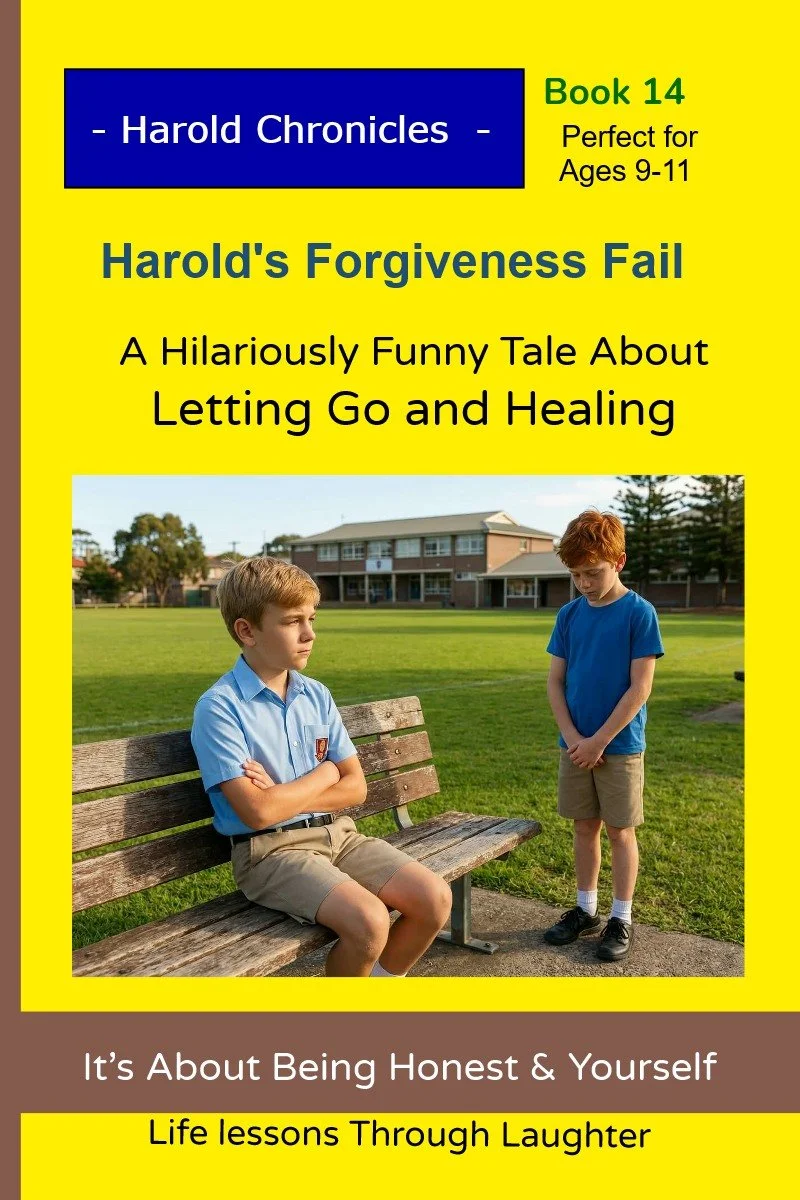
BOOK 14: HAROLD’S FORGIVENESS FAIL
Theme:Conflict Resolution & Letting Go
The Hook: When Murphy calls one of Harold’s ideas "boring," Harold decides to launch a cold war. He gives his best friend the silent treatment for two whole weeks, nursing a grudge that grows bigger every day. But while Harold is busy being "right," he discovers that being lonely is a high price to pay for pride.
The Lesson:Relationships. Forgiveness is a gift you give yourself. Holding onto anger hurts you more than the person you are mad at.
Why kids love it: The relatable "silent treatment" drama and the relief of the friends finally breaking the ice.
The Educator’s Edge: Aligned to ACARA (Social Awareness) and CASEL (Relationship Skills).
BOOK 15: HAROLD’S COURAGE CRISIS
Theme: TAKING ACTION DESPITE FEAR
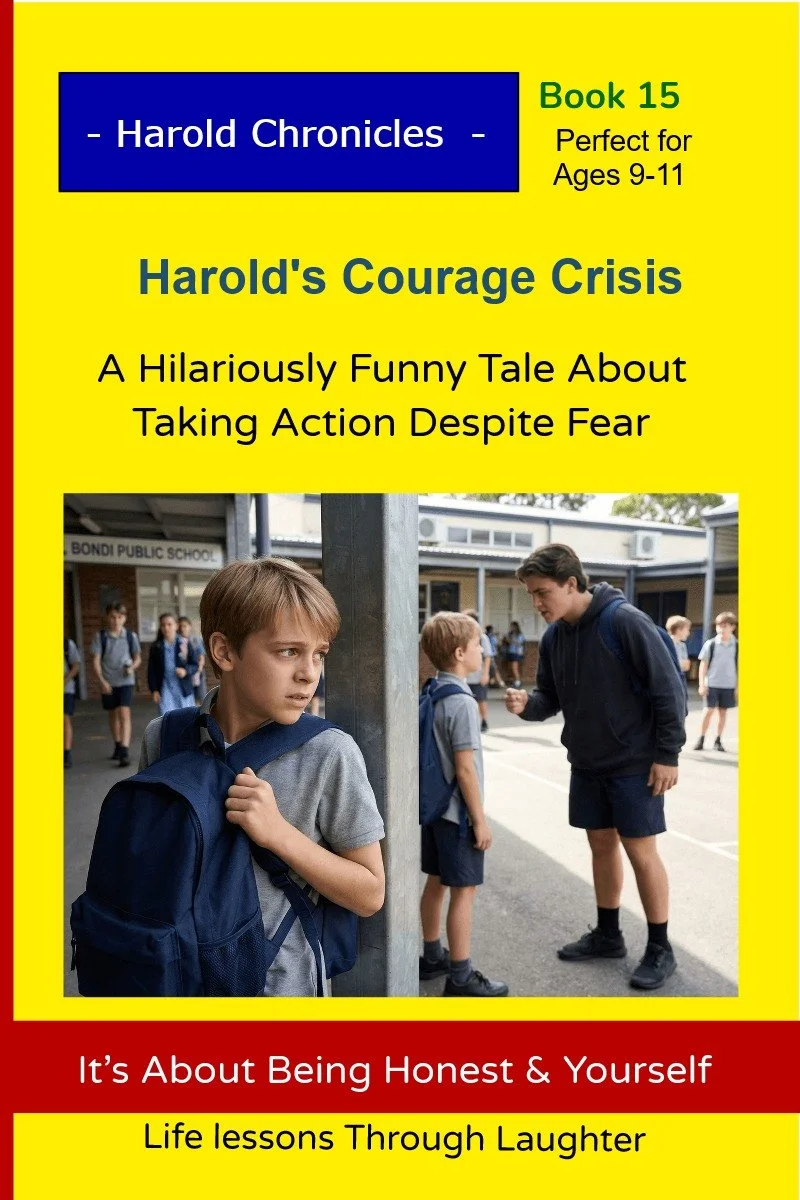
BOOK 15: HAROLD’S COURAGE CRISIS
Theme:Bystander Intervention & Moral Courage
The Hook: Harold witnesses an older student bullying a Year 3 kid for lunch money. He’s terrified of becoming a target himself, so he freezes. Consumed by guilt, Harold realizes that "not being mean" isn't enough—sometimes you have to be brave. He faces the ultimate choice: stay safe in silence or speak up for someone who can't.
The Lesson:Courage. Bravery isn't the absence of fear; it is acting in spite of it.
Why kids love it: The high stakes of the playground politics and the empowering moment Harold finds his voice.
The Educator’s Edge: Aligned to ACARA (Social Management: AC9HP6P03) and CCSS (Theme: Courage).
BOOK 16: HAROLD’S INTEGRITY ISSUE
Theme: DOING THE RIGHT THIN - EVEN WHEN NO ONE IS LOOKING
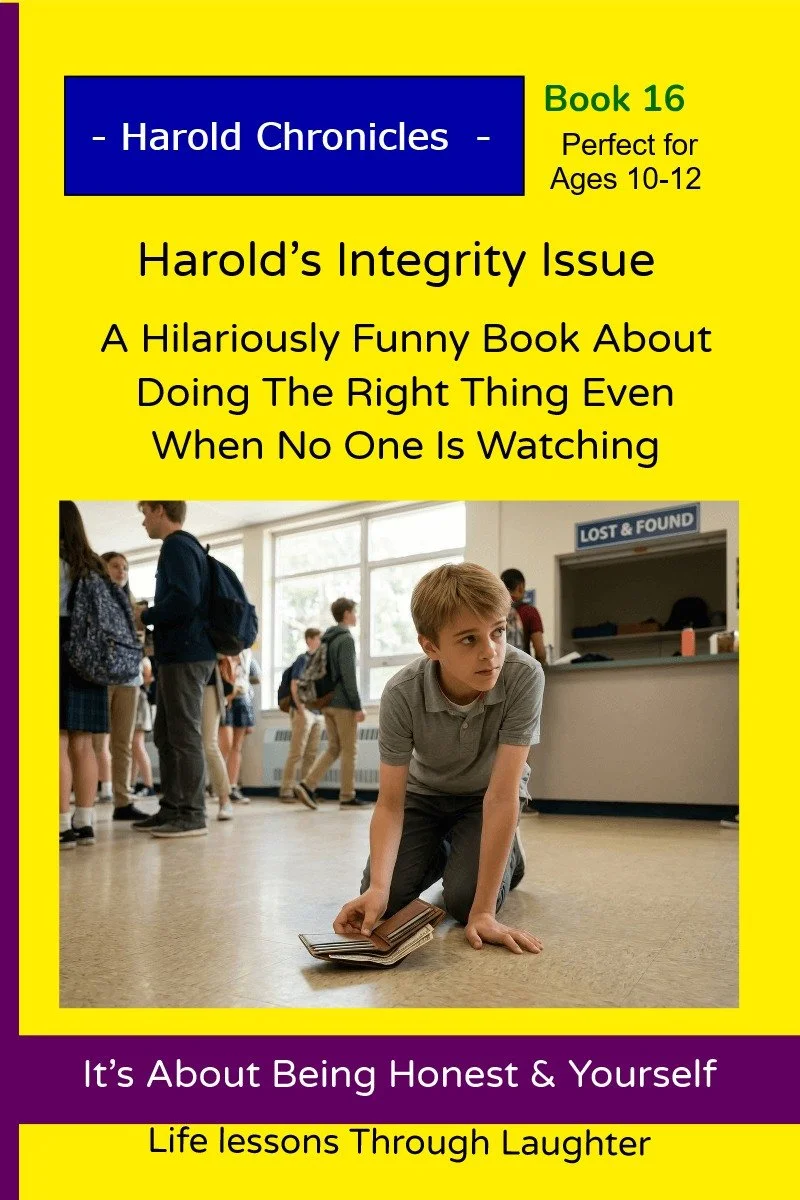
BOOK 16: HAROLD’S INTEGRITY ISSUE
Theme:Ethical Decision Making
The Hook: Harold finds a wallet stuffed with cash on the cafeteria floor. No one saw him pick it up. No one knows it’s missing yet. He could buy the new skateboard he’s been dreaming of... or he could turn it in. The battle between "Finders Keepers" and his conscience plays out in a tense internal struggle.
The Lesson:Integrity. Integrity is doing the right thing even when no one is watching.
Why kids love it: The intense "what would I do?" debate and the feeling of relief when the right choice is finally made.
The Educator’s Edge: Aligned to ACARA (Ethical Understanding) and CCSS (Internal Conflict: RL.5.3).
BOOK 17: HAROLD’S INCLUSIVITY IGNORANCE
Theme: ACTIVELY INCLUDING OTHERS
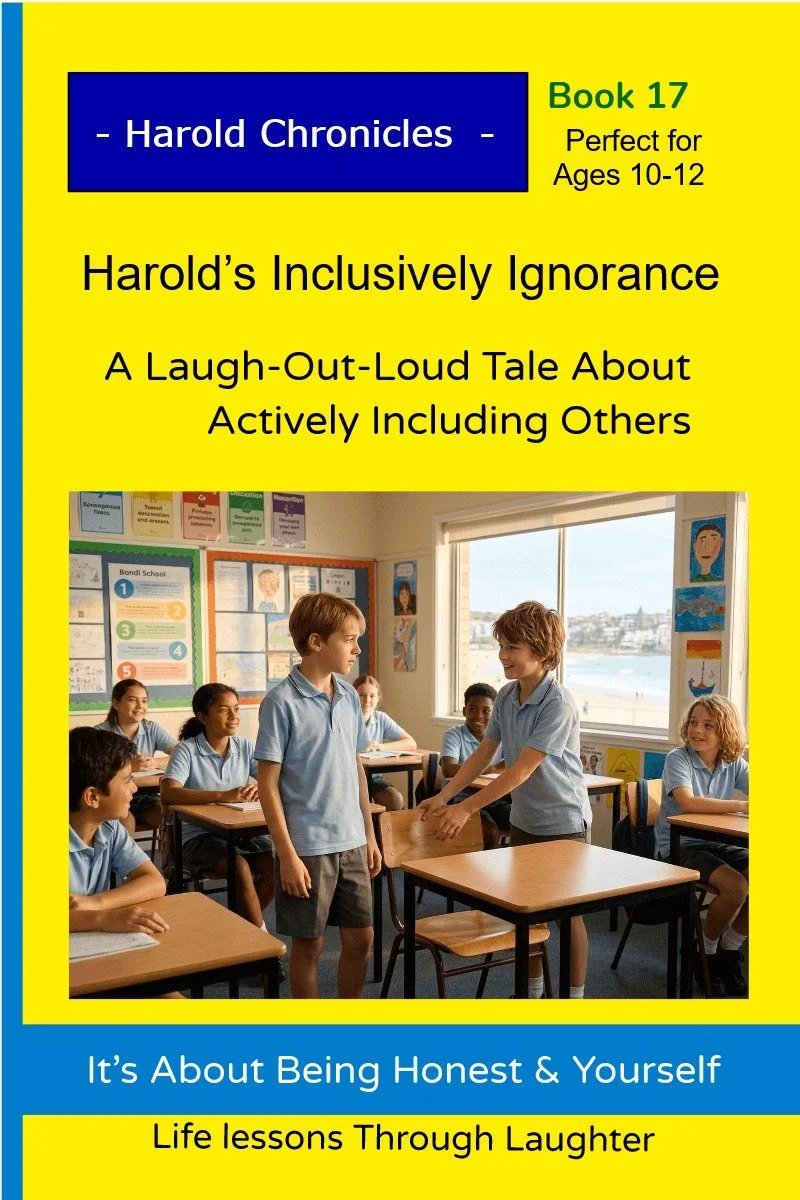
BOOK 17: HAROLD’S INCLUSIVITY IGNORANCE
Theme:Inclusion vs. Exclusion
The Hook: A new student, Zain, arrives at school. Harold and his friends are polite—they smile and say hello—but they don't actually invite him to join their group. Harold thinks he’s being nice, until he realises that ignoring someone is just a quiet form of bullying. He has to step out of his comfort zone to widen the circle.
The Lesson:Social Awareness. Inclusion is an active choice. It's not enough to just "not be mean"; you have to actively welcome people in.
Why kids love it: Understanding the difference between a "classmate" and a "friend," and the joy of a bigger team.
The Educator’s Edge: Aligned to ACARA (Intercultural Understanding) and CCSS (Social Skills).
BOOK 18: Harold’s OPTIMISM OBSTACLE
Theme: HOPE AND RESILIENCE
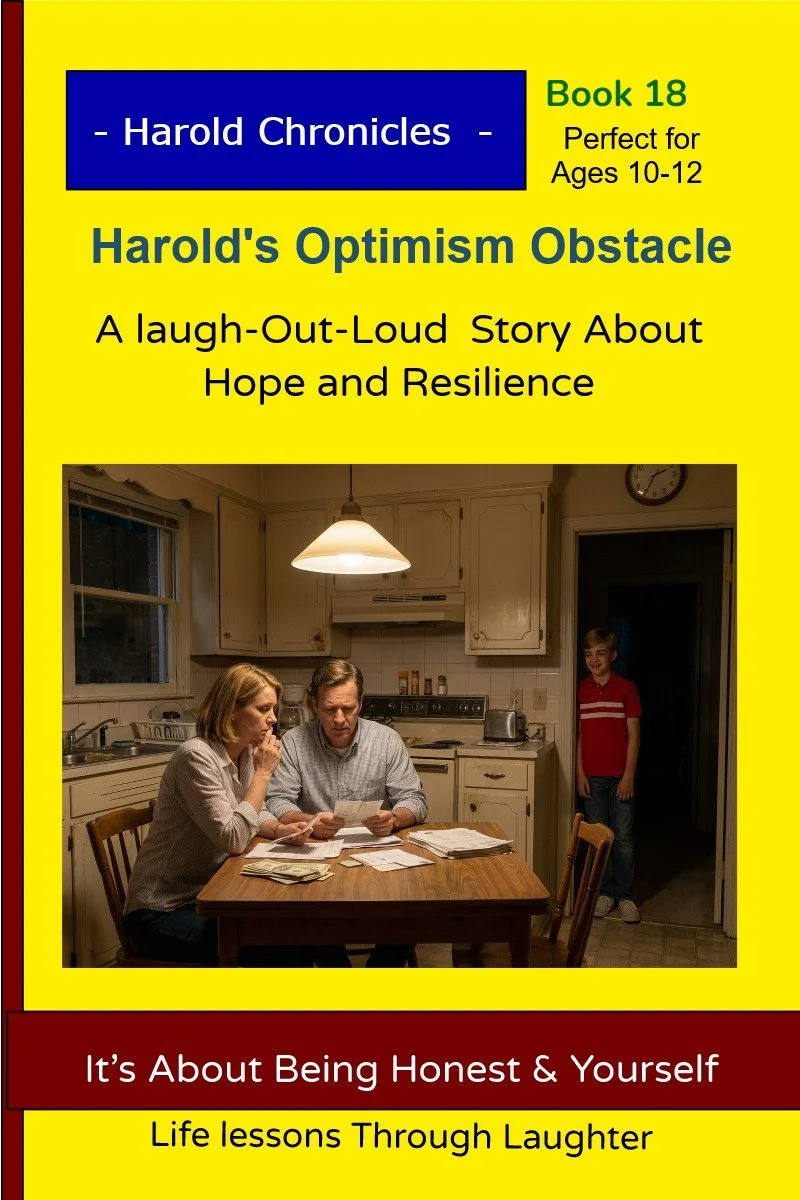
BOOK 18: HAROLD’S OPTIMISM OBSTACLE
Theme:Resilience & Realistic Hope
The Hook: When his dad’s work hours are cut, Harold spirals into panic. He starts catastrophizing, convinced his family will lose everything. Through his mother’s wisdom and a family budget meeting, Harold learns that optimism isn't ignoring problems—it's believing you have the strength to solve them together.
The Lesson:Resilience. Hard times don't last, but resilient families do. Hope is a muscle you build when things are tough.
Why kids love it: Dealing with real-world family financial stress in a way that feels manageable and hopeful, not scary.
The Educator’s Edge: Aligned to ACARA (Personal Strengths) and CCSS (Real-World Connections).