Series ARC 4: The Mastery Years
ARC 4: MASTERY YEARS
Books 19 - 24 | Ages 12 - 13
Harold deepens his understanding of identity, relationships, ethics, and contribution. He's becoming who he's meant to be.
BOOK 19: Harold's Authenticity Adventure
Theme: Being Genuinely Yourself
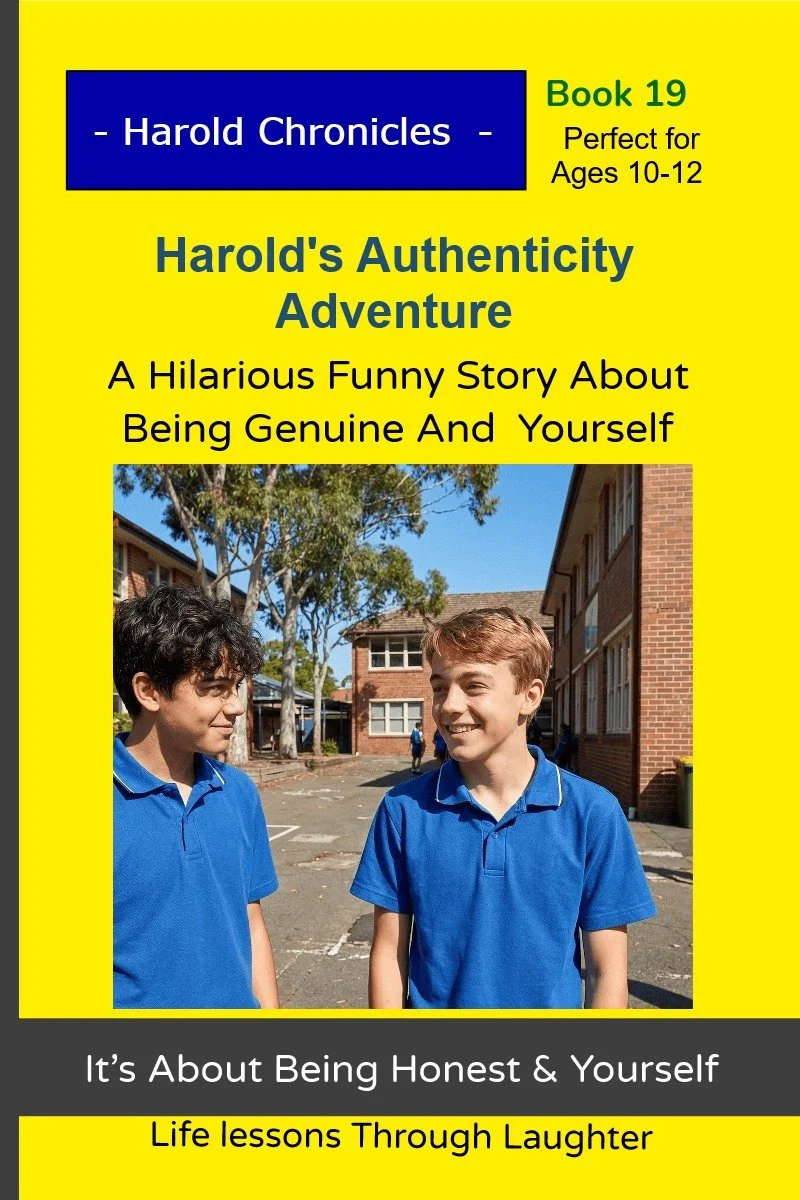
BOOK 19: HAROLD’S AUTHENTICITY ADVENTURE
Theme:Identity & Self-Acceptance
The Hook: Harold is desperate to join the "cool group" at school. He trades his fantasy novels for indie music, starts drinking black coffee (which he hates), and pretends to be someone he isn't. But maintaining the performance is exhausting. When his mask finally slips, Harold learns that the only people worth impressing are the ones who like the real you.
The Lesson:Authenticity. Real mastery isn't about becoming someone "better"—it's about becoming fully yourself.
Why kids love it: The painful but funny reality of trying too hard to be cool, and the relief of finally just being a "nerd" again.
The Educator’s Edge: Aligned to ACARA (Personal Identity: AC9HP8P01) and CCSS (Character Development).
BOOK 20: Harold's Community Connection
Theme: Service and Impact
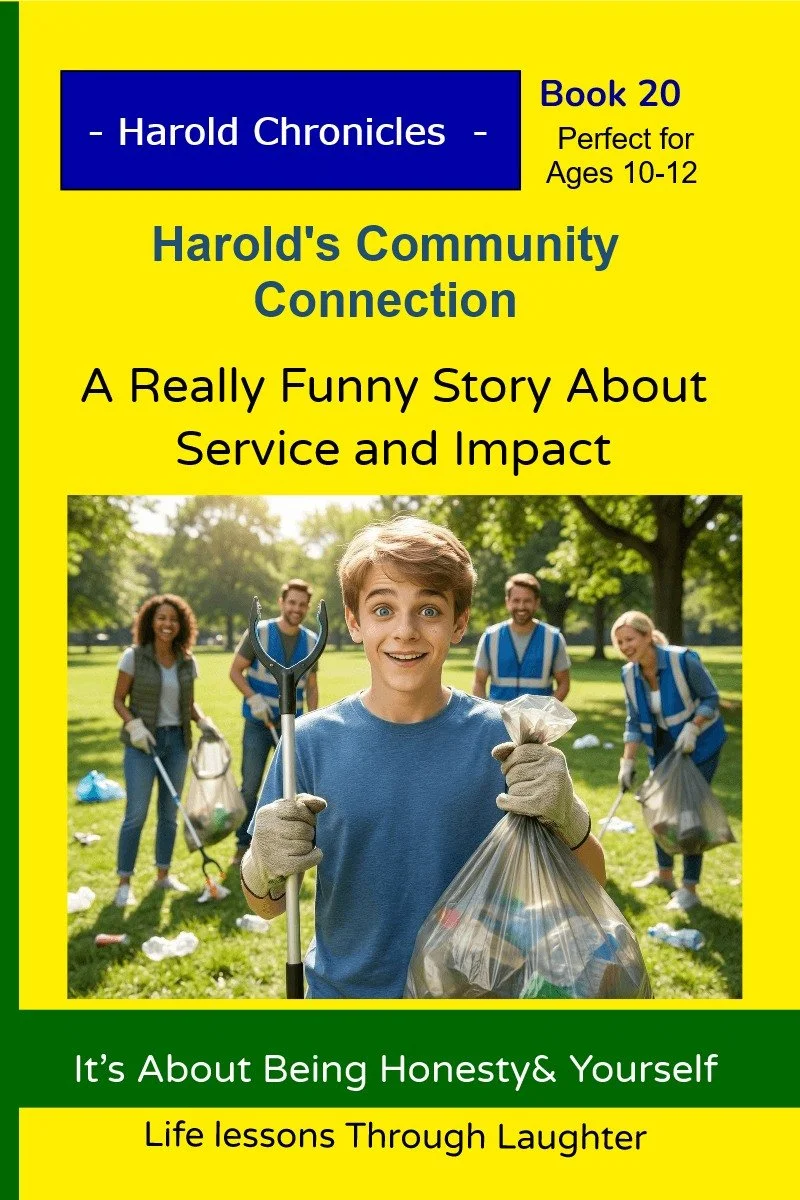
BOOK 20: HAROLD’S COMMUNITY CONNECTION
Theme:Service & Civic Responsibility
The Hook: Harold groans when he is assigned mandatory community service at a local food bank. He views it as a chore to be endured—until he meets Marcus, a man who relies on the service. Harold’s perspective shifts from "checking a box" to genuine connection, realizing that service isn't about pity; it's about partnership.
The Lesson:Purpose. Success isn't measured by what you achieve for yourself, but by the impact you have on your community.
Why kids love it: Moving from the "bored volunteer" trope to finding actual meaning in helping others.
The Educator’s Edge: Aligned to ACARA (Community Connection) and CCSS (Civic Participation).
BOOK 21: HAROLD'S DIGITAL DILEMMA
Theme: Technology Balance & Being Present
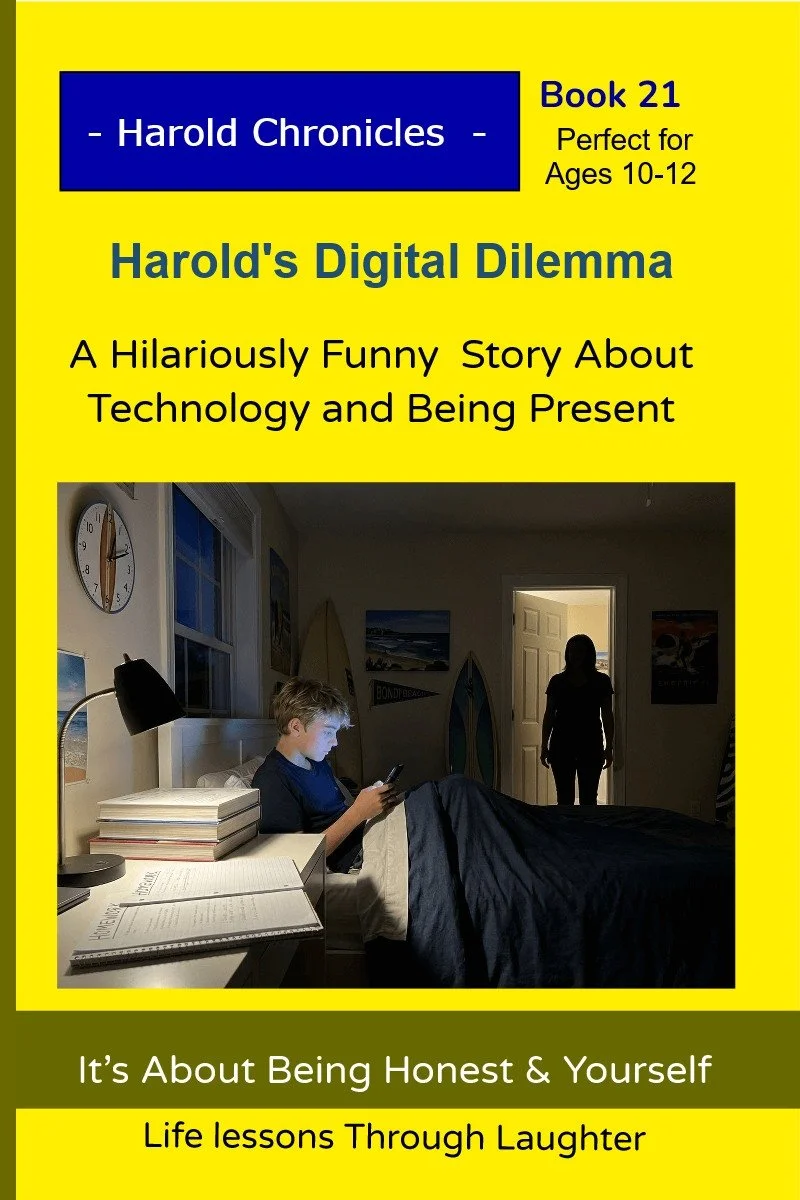
BOOK 21: HAROLD’S DIGITAL DILEMMA
Theme:Digital Wellbeing & FOMO
The Hook: For his 13th birthday, Harold gets his first smartphone. Within a week, he is addicted—checking it 47 times a day, obsessing over likes, and drowning in FOMO (Fear Of Missing Out). When he misses a real-life moment because he was too busy trying to "capture" it for social media, he realizes he has become a tool of his own technology.
The Lesson:Balance. Technology is a tool, not a master. Real life happens offline, and boundaries protect your peace.
Why kids love it: A hyper-relevant story for every modern teen struggling to put the phone down.
The Educator’s Edge: Aligned to ACARA (Digital Literacy) and ISTE Standards (Digital Citizen).
BOOK 22: HAROLD'S PRESSURE PROBLEM
Theme: Peer Pressure - saying no and Standing Up for Your Values
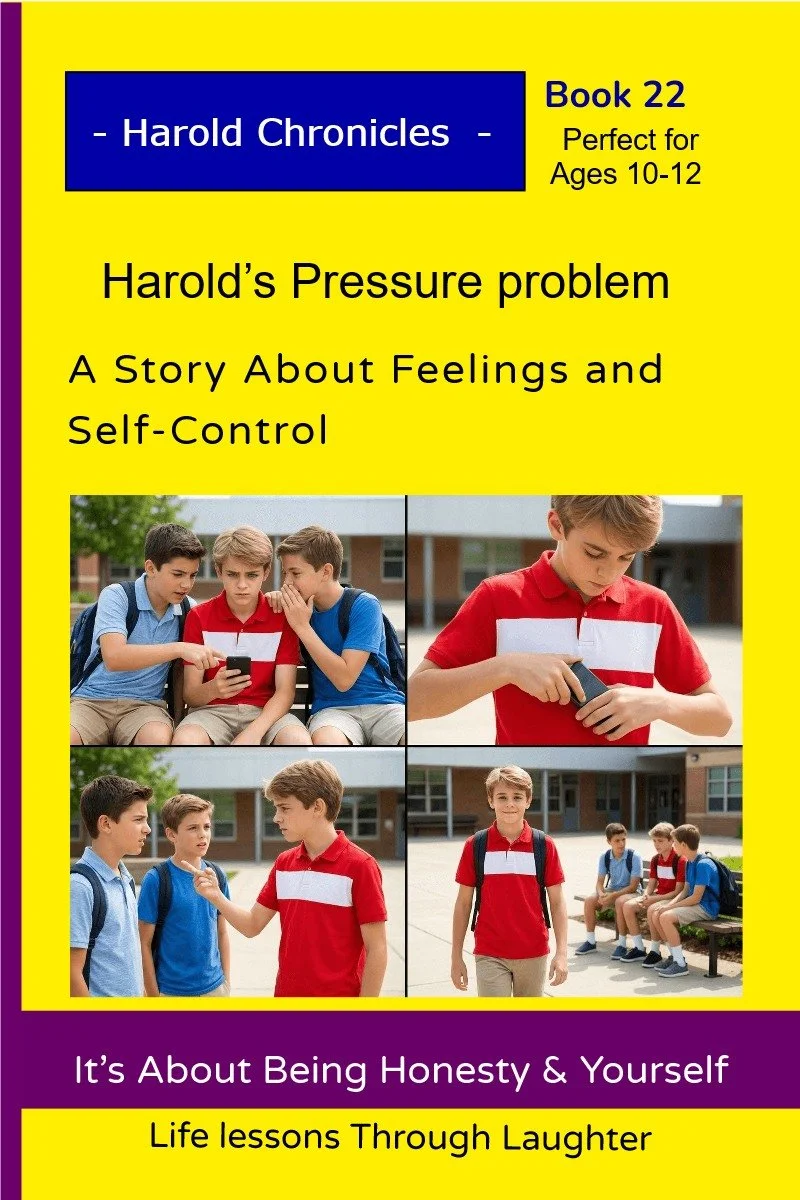
BOOK 22: HAROLD’S PRESSURE PROBLEM
Theme:Peer Pressure & Setting Boundaries
The Hook: Peer pressure in Year 8 isn't always loud; sometimes it's a whisper. Harold faces the subtle squeeze to skip homework, post mean videos, and "just go along with it." He learns that saying "No" is actually a complete sentence—and that a boundary isn't a wall to keep people out, but a gate to keep yourself safe.
The Lesson:Assertiveness. Real confidence comes from knowing your values and defending them, even when your voice shakes.
Why kids love it: It gives them the actual words to use when they feel pressured by friends.
The Educator’s Edge: Aligned to ACARA (Social Management: Refusal Skills) and CCSS (Social Norms).
BOOK 23: HAROLD'S IDENTITY INVESTIGATION
Theme: Self-Discovery & Authentic Identity
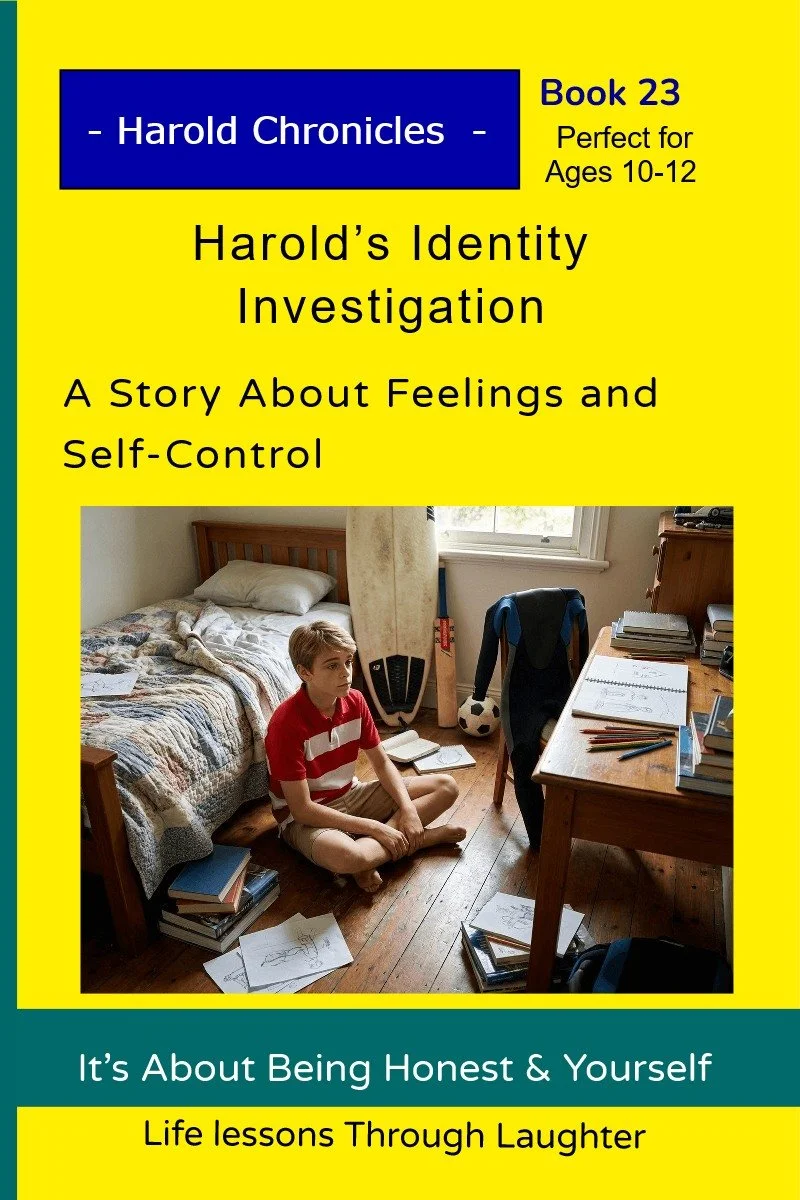
BOOK 23: HAROLD’S IDENTITY INVESTIGATION
Theme:Self-Discovery & Integration
The Hook: Harold is in Year 9 and facing a crisis of categorization. Everyone else seems to have picked a lane: Marcus is "The Jock," Sophie is "The Artist," Jackson is "The Gamer." Harold feels like a jigsaw puzzle with pieces from different boxes. He spends a week trying on different "costumes"—acting like a brooding poet one day and a sports fanatic the next—until he realizes that being "multifaceted" isn't a flaw; it's a superpower.
The Lesson:Integration. You don't have to shrink yourself to fit a label. True identity isn't about picking one thing; it's about integrating all parts of who you are.
Why kids love it: The comedy of Harold trying to fake being "deep" (and failing), and the relief of realizing they don't have to fit into a single box.
The Educator’s Edge: Aligned to ACARA (Personal Identity) and CCSS (Character Development).
BOOK 24: Harold's Misinformation Mix-Up
Theme: Self Discovery
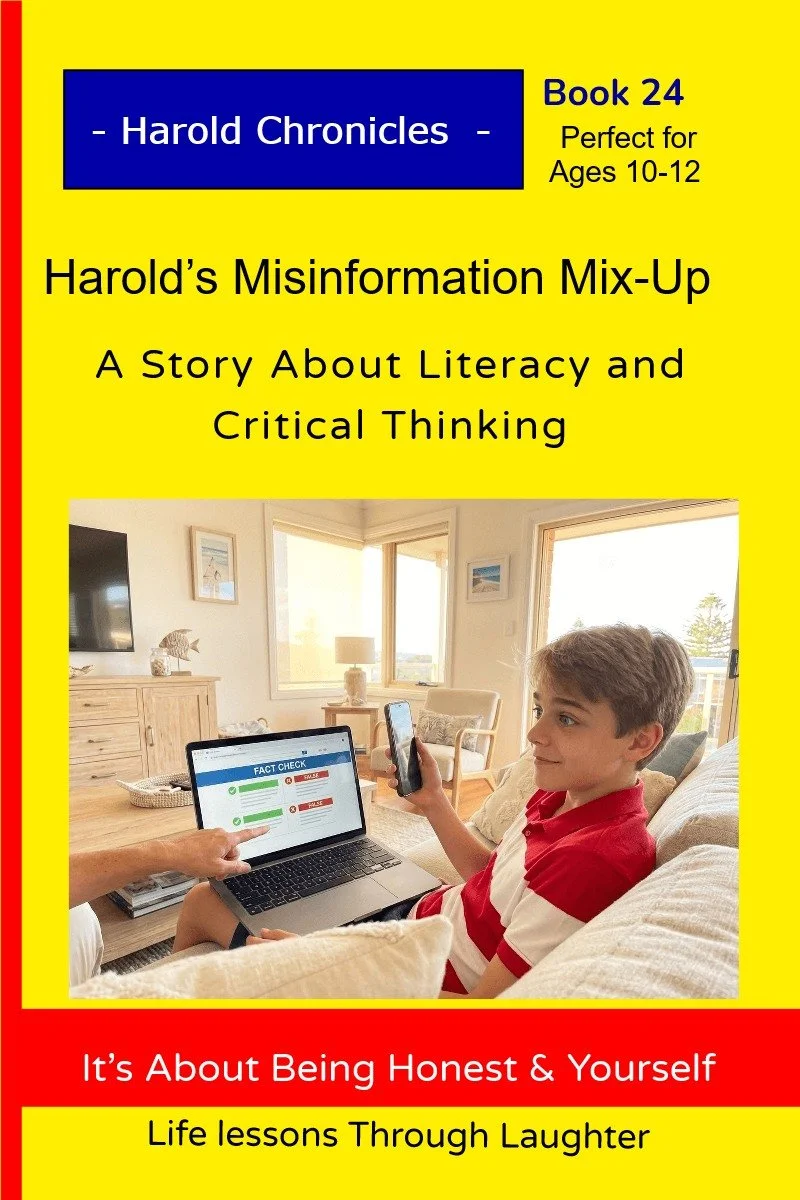
BOOK 24: HAROLD’S MISINFORMATION MIX-UP (Arc 4 Capstone)
Theme:Media Literacy & Critical Thinking
The Hook: Harold stumbles upon a shocking video of a politician saying something terrible. Outraged, he instantly hits "Share," adding a fiery caption. The post blows up in his network. He feels like a social justice warrior—until he learns the video was a "deepfake," edited to change the meaning entirely. Now, Harold has to undo the damage and learns that in the digital age, a lie travels around the world before the truth has even tied its shoes.
The Lesson:Digital Citizenship. Your voice has power; verify before you amplify. Being a responsible citizen means being a critical thinker, not just a content sharer.
Why kids love it: It deals with the real embarrassment of being "wrong on the internet" and gives them tools to spot fake news without feeling lectured.
The Educator’s Edge: Aligned to ACARA (Media Literacy) and ISTE (Information Citizenship).