series arc 5: the growing up years
ARC 5: GROWING UP YEARS
Books 25 - 29 | Ages 14 - 15
Harold navigates the complexities of adolescence: technology, mental health, identity, and discovering who he's becoming.
BOOK 25: HAROLD'S AI ANXIETY
Theme: technology & Human Value
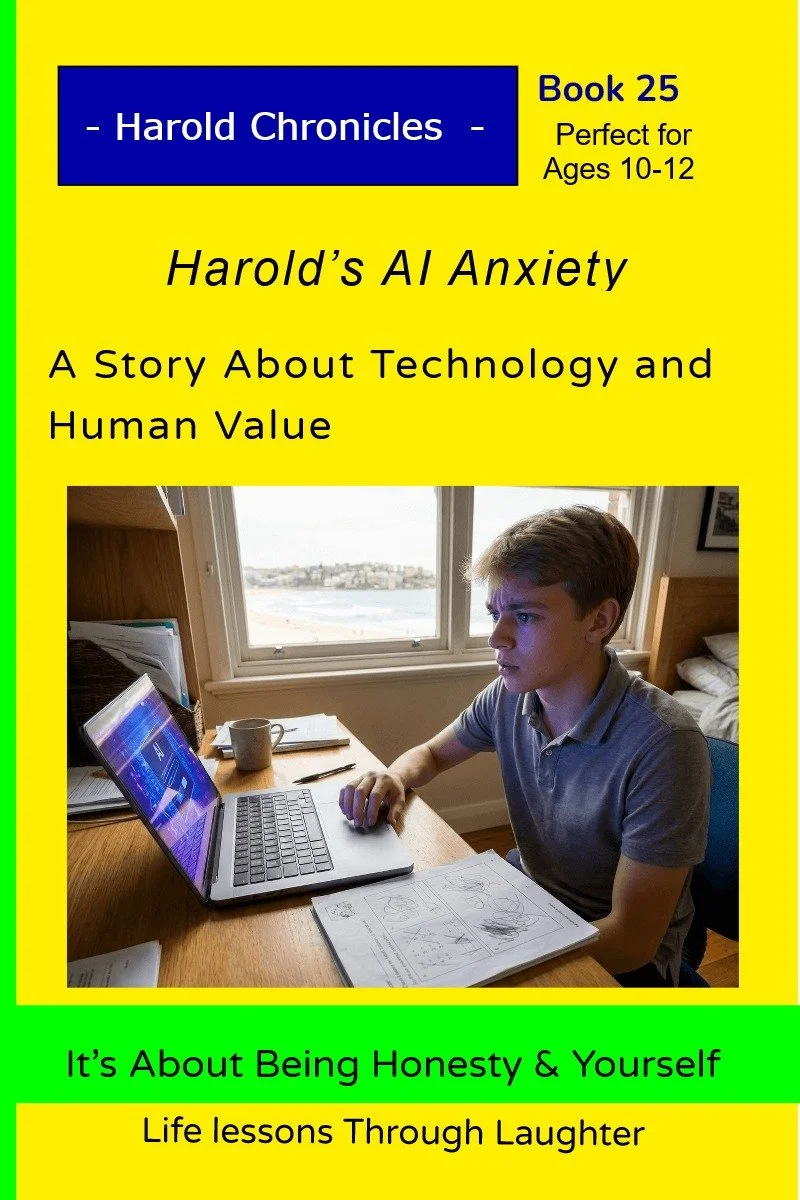
BOOK 25: HAROLD’S AI ANXIETY
Theme:Human Value in a Digital World
The Hook: Harold is terrified. He watches an AI write a poem in seconds and solve math problems instantly, leaving him wondering: If a machine can do everything better than me, do I even matter? Tempted to let the AI write his English essay, Harold discovers that while a machine can generate text, only a human can generate meaning—and that the struggle to create is what makes us real.
The Lesson:Humanity. You are valuable for who you are, not just what you produce. Technology is a tool for connection, not a replacement for the human soul.
Why kids love it: It validates their very real fears about the future and empowers them to see their own creativity as a superpower that code can't replicate.
The Educator’s Edge: Aligned to ACARA (Digital Literacy: Ethical Understanding) and ISTE (Artificial Intelligence).
BOOK 26: HAROLD'S FRIENDSHIP FRICTION
Theme: Relationships Evolving & Accepting Change
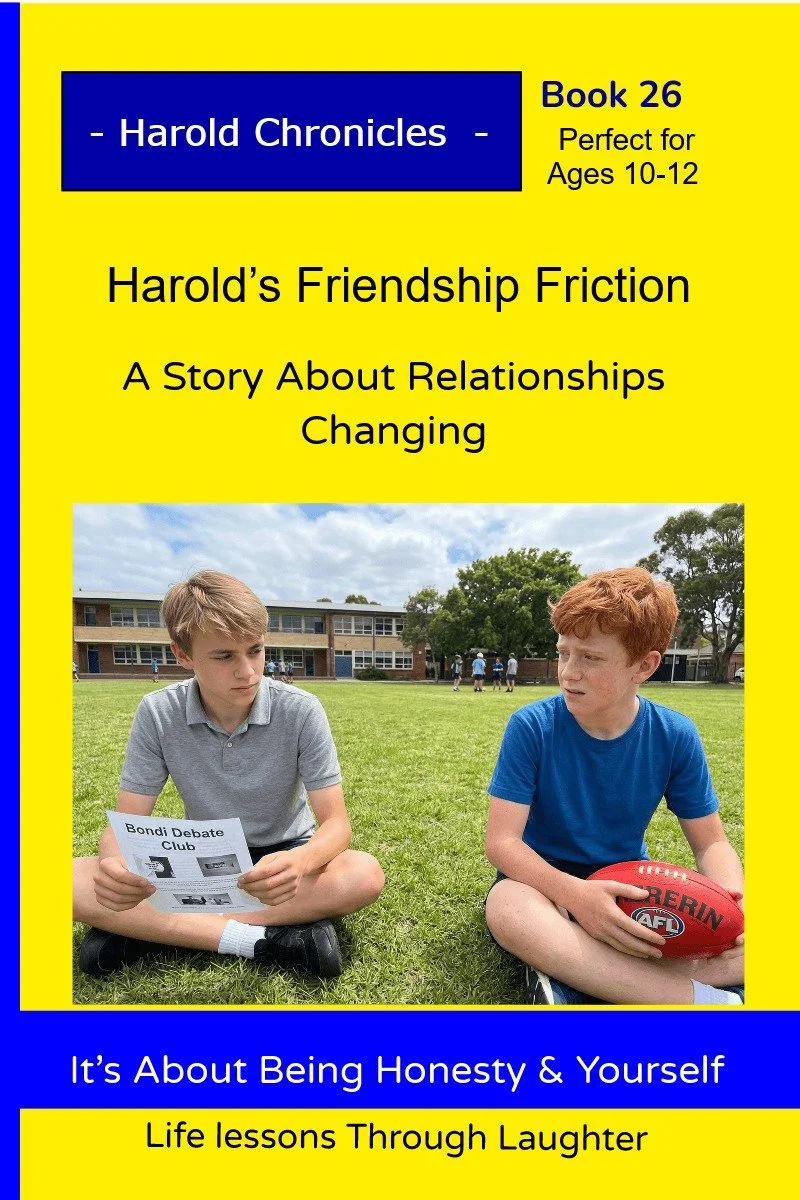
BOOK 26: HAROLD’S FRIENDSHIP FRICTION
Theme:Navigating Changing Relationships
The Hook: Harold and Murphy have been inseparable since Book 1. But now, Murphy is obsessed with competitive gaming, while Harold is diving into philosophy and creative writing. The silence between them grows awkward. Harold fears the friendship is over, until he learns that growing up doesn't have to mean growing apart—it just means finding new ways to connect.
The Lesson:Adaptability. Relationships are living things; they change. Real friendship isn't about being exactly the same; it's about witnessing each other's evolution with kindness.
Why kids love it: The heartbreaking realism of drifting away from a childhood friend, and the hope that comes from bridging the gap.
The Educator’s Edge: Aligned to ACARA (Social Management) and CCSS (Interpersonal Communication).BOOK 26: HAROLD’S FRIENDSHIP FRICTION
BOOK 27: HAROLD'S ANXIETY ADVENTURE
Theme: Mental Health & asking for Help
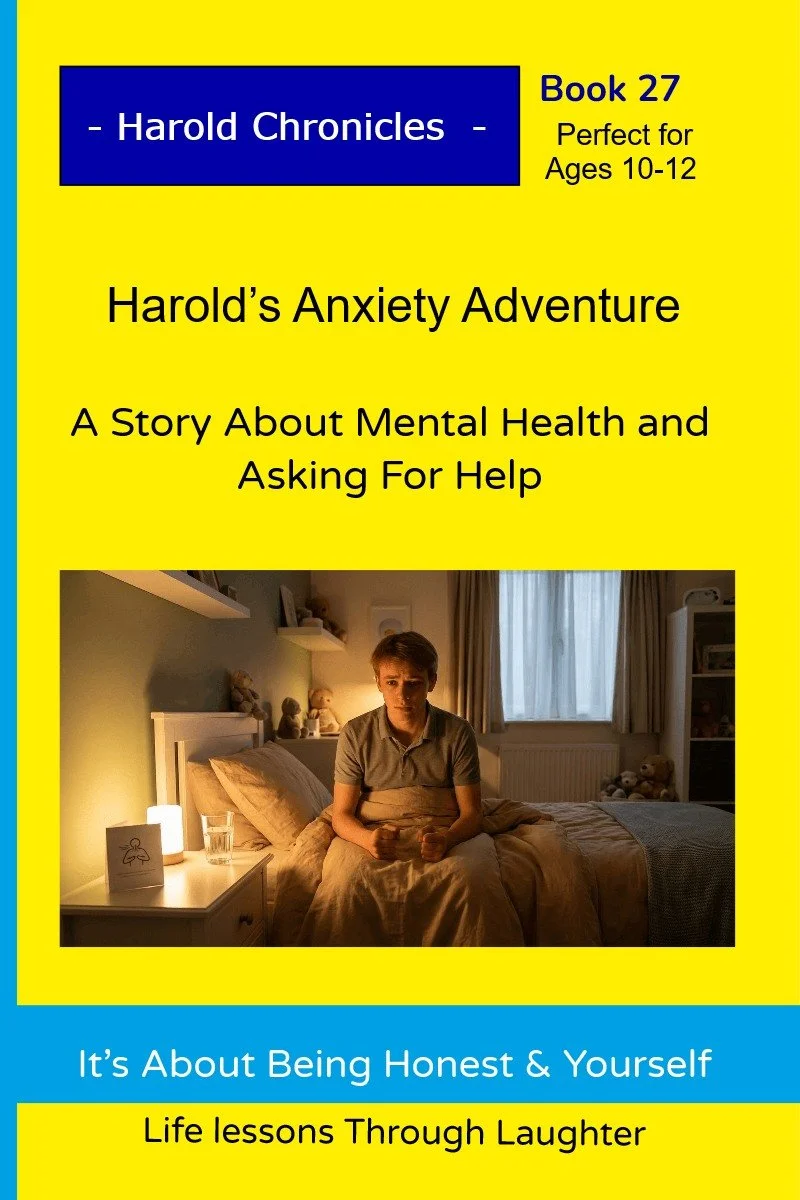
BOOK 27: HAROLD’S ANXIETY ADVENTURE
Theme:Mental Health Literacy & Seeking Help
The Hook: It starts with a tight chest and racing thoughts. Harold tries to ignore it, telling himself everyone gets worried. But when the anxiety begins to steal his sleep and his joy, he realizes he can't "think" his way out of it alone. In his bravest moment yet, Harold speaks up to his parents and learns that asking for professional help isn't a sign of weakness—it's the ultimate act of self-leadership.
The Lesson:Resilience. Mental health is physical health. Treating yourself with compassion and seeking support makes healing possible.
Why kids love it: It gives language to the physical symptoms of anxiety they may be feeling but don't understand.
The Educator’s Edge: Aligned to ACARA (Personal Safety & Wellbeing) and Health Standards (Mental Health Literacy).
BOOK 28: HAROLD'S CHANGE CHALLENGE
Theme: Puberty & Self-Acceptance
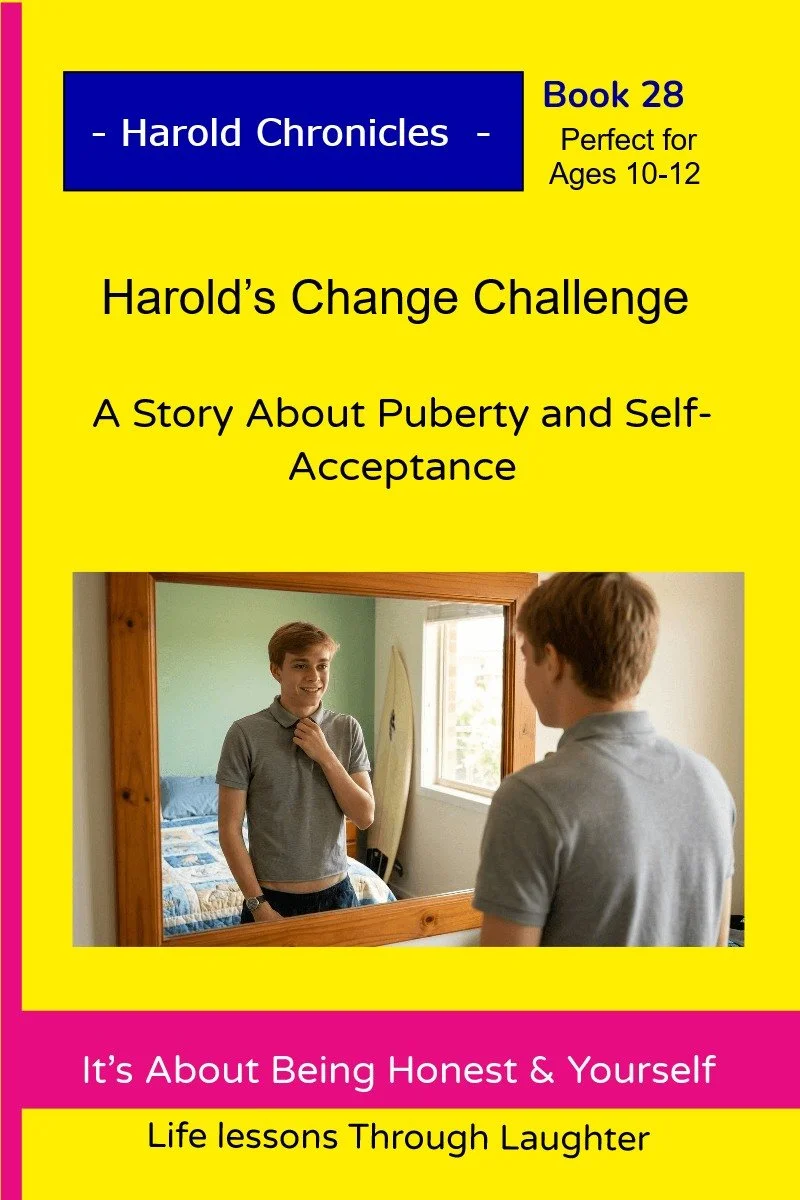
BOOK 28: HAROLD’S CHANGE CHALLENGE
Theme:Puberty, Body Image & Self-Acceptance
The Hook: Harold’s voice is cracking, his limbs feel too long for his body, and he suddenly feels like he’s performing a comedy routine just by walking down the hall. Overwhelmed by shame and hyper-awareness, Harold wants to turn invisible. He learns that the "awkward phase" isn't a mistake—it's the messy, necessary cocoon before the butterfly.
The Lesson:Self-Acceptance. Shame thrives in silence but dies when we talk about it. Everyone feels like an impostor in their own skin sometimes.
Why kids love it: It normalizes the "cringe" of puberty and helps them laugh at the universality of the experience.
The Educator’s Edge: Aligned to ACARA (Growth & Development) and Health Standards (Body Confidence).
BOOK 29: HAROLD'S FUTURE FOCUS
Theme: Dreams, Goals & Defining Success
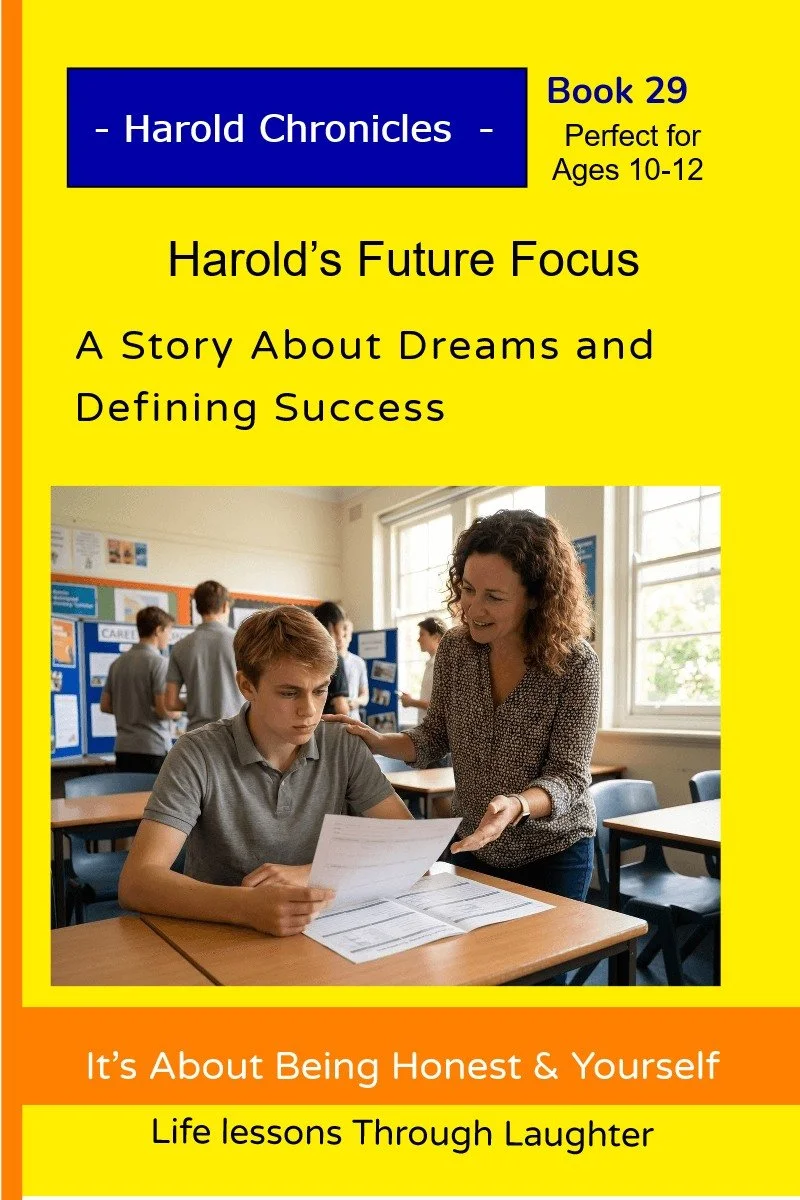
BOOK 29: HAROLD’S LEGACY JOURNEY (The Series Finale)
Theme:Integration, Purpose & Future Focus
The Hook: Harold sits in his room, looking back at 29 adventures—from the exploding volcano at age 8 to the young man he is at 15. He realizes that "Hazardous Harold" wasn't a warning label; it was a badge of honor. He hasn't just survived the chaos; he has integrated it. Harold looks to the future not as a person who has all the answers, but as someone who knows he can handle the questions.
The Lesson:Integration. Ordinary lives create extraordinary ripples. Your legacy isn't what you leave behind; it's who you become along the way.
Why kids love it: The deeply satisfying emotional payoff of seeing how far Harold has come, and the permission to embrace their own "hazardous" journey.
The Educator’s Edge: Aligned to ACARA (Life Planning) and CCSS (Reflection & Synthesis).
READER RECOMMENDATIONS
Reading Order: The Harold series is designed to be read sequentially. Each book stands alone, but the character development and thematic progression are strongest when read in order.
For First-Time Readers: Start with Book 1. You'll fall in love with Harold and won't be able to stop.
For Parents: Each book is designed to be a conversation starter with your child. The topics are age-appropriate and meaningful.
For Educators: Each arc aligns with grade levels and developmental stages. The books integrate seamlessly with social-emotional learning curricula.
Pacing Options:
2-3 books per month — Balanced with other reading
1 book per month — Allows deeper discussion and processing
Sequential over school year — One per month aligns with school calendars