

The Harold Wellbeing & Care Framework (Arc 5)
The Harold Wellbeing & Care Framework™™
Supporting Young People Through Stories, Communication, and Early Intervention
The Harold Wellbeing Framework™ is an evidence-informed approach designed to help educators, parents, and communities support the wellbeing, learning, and development of young people.
Built around the belief that the child should always remain at the centre, the framework combines literacy, wellbeing education, family-school communication, and practical support resources into one connected system.
Rather than waiting until a concern becomes a crisis, the framework encourages early awareness, meaningful conversations, and coordinated support.
One Child. One Story. One Connected Support System.
Why The Harold Wellbeing & Care Framework™ Exists
Young people today face a growing range of challenges:
school anxiety
friendship difficulties
digital pressures
social isolation
identity questions
emotional regulation challenges
mental health concerns
While support services exist, families and educators often struggle to know:
What should I do?
Who should I talk to?
Is this serious?
How do we communicate effectively?
When should professional support be involved?
The Harold Wellbeing & Care Framework™ was developed to help bridge these gaps through practical, easy-to-understand tools that support communication, observation, and informed decision-making.
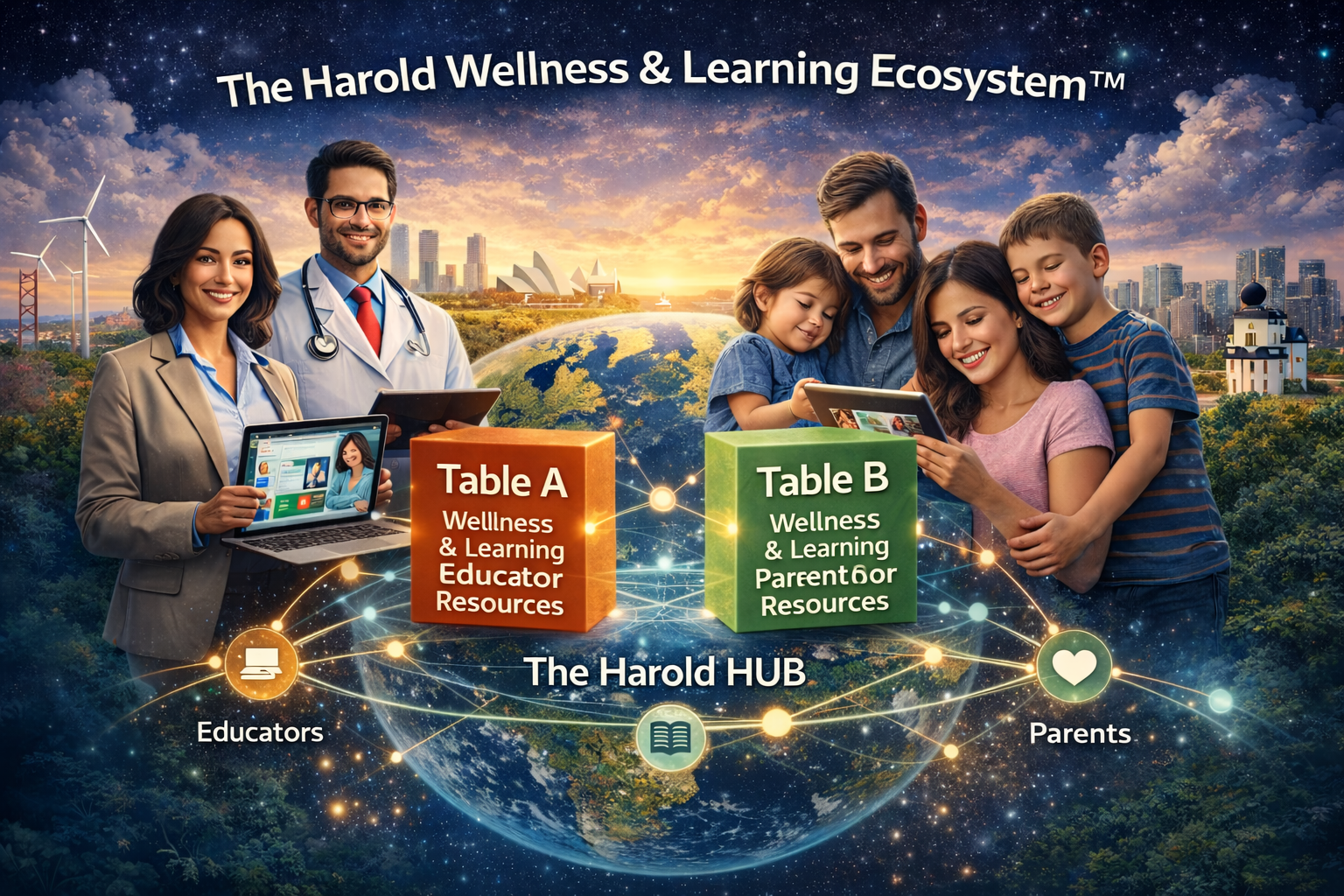
The Harold Wellbeing & Care Framework HUB: A Connected Ecosystem for Youth Wellbeing
One Story. Three Perspectives. A Unified Path to Support.
Most learning systems stop at the classroom door. The Harold Wellbeing & Care Framework HUB is different. It is a structured coordination framework designed to ensure that the three most important influences in a young person’s life—Families, Educators, and Health Professionals—are speaking the same language.
Built to accompany The Misadventures of Hazardous Harold (Arc 5), this ecosystem provides the practical tools needed to navigate the complex challenges of early adolescence, from digital anxiety to identity formation